
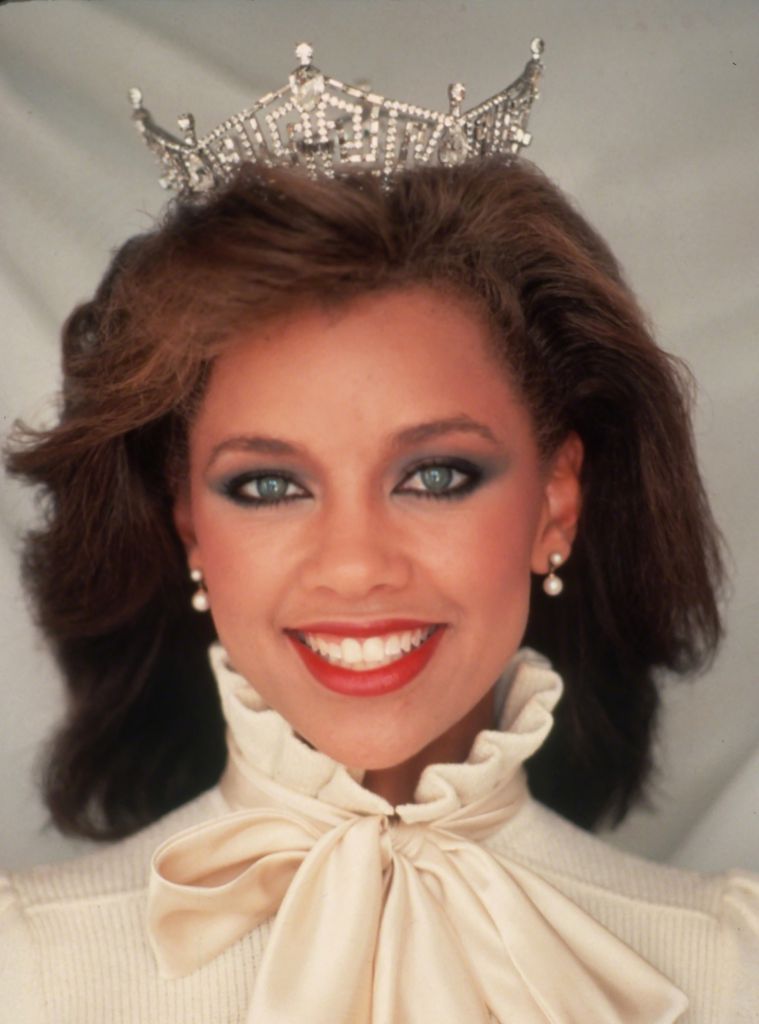
Forty-three years ago, a 20-year-old from New York walked onto a stage in Atlantic City and made American history.
On September 17, 1983, Vanessa Williams was crowned Miss America 1984 — the first Black woman to win the title in the pageant’s 62-year history. She was a musical theater student at Syracuse University who had entered the pageant circuit for scholarship money, winning Miss Syracuse that spring and Miss New York that summer before sweeping the national crown with her vocal performance of “Happy Days Are Here Again,” plus preliminary wins in both talent and swimsuit.
She was 20 years old, poised, brilliant — and she had no idea what was coming.
The weight of the crown
Winning was never just about a sash for Williams. In the civil rights generation’s eyes, a Black Miss America was a statement six decades in the making. The pageant had, for most of its life, upheld a narrow standard of white femininity; discriminatory rules had long kept women of color out of the running entirely. Her victory said the country’s most traditional definition of beauty had finally been forced to expand.
But history’s spotlight has a shadow. Years later, looking back on that time, Williams described what the crown actually brought her: “To have white people who wanted to kill me because I was black and to have death threats against my family because they felt that I was tarnishing the Miss America crown because I was a black person. So it was an incredible time.”
Death threats. Against her family. For winning a beauty pageant while Black. That was 1983.

The scandal that stole it
Then came the blow nobody saw coming — or at least, the one Williams hoped would stay buried. Penthouse magazine bought and published nude photographs of her, taken before the pageant, showing her in simulated sex acts with another female model. Williams said she never consented to their publication.
The Miss America Organization gave her a choice that wasn’t a choice: resign, or be stripped. On July 23, 1984 — ten months into her reign — she gave up the crown, becoming the first Miss America ever to relinquish the title. The first runner-up, Suzette Charles of New Jersey, finished out the year.
She was 21. In a single year she had made history, been threatened for it, and been publicly humiliated on a national scale. Most people would have disappeared. Vanessa Williams went to work.
The greatest comeback in the business
Here’s what they don’t tell you about that scandal: it was supposed to end her. Instead, it became the opening act of one of the most decorated careers in American entertainment.
In 1988, Williams released her debut album, The Right Stuff — and it went multi-platinum. The title track hit No. 1 on the R&B charts. Then came 1992’s “Save the Best for Last,” which sat at No. 1 on the Billboard Hot 100 for five weeks and became one of the defining ballads of the decade. Over her music career she sold more than 7 million records and collected 17 Grammy nominations.
She conquered Broadway too, starring in Kiss of the Spider Woman in 1994 and a celebrated revival of Into the Woods in 2002, earning a Tony nomination. On television she became unforgettable as Wilhelmina Slater, the deliciously ruthless fashion editor on ABC’s Ugly Betty — three Emmy nominations — and later as Renee Perry on Desperate Housewives. Add her Grammy win for “Colors of the Wind” from Disney’s Pocahontas, and her trophy shelf spans music, stage, and screen.
She didn’t just survive the scandal. She made it a footnote.
The apology, 32 years late
In September 2015, Williams returned to the Miss America stage — this time as head judge for the Miss America 2016 pageant. After she performed on stage, the organization’s CEO, Sam Haskell, walked out and did something the pageant had never done: he apologized.
“You have lived your life in grace and dignity, and never was it more evident than during the events of 1984 when you resigned,” Haskell told her. “Though none of us currently in the organization were involved then, on behalf of today’s organization, I want to apologize to you and to your mother, Miss Helen Williams. I want to apologize for anything that was said or done that made you feel any less than the Miss America you are and the Miss America you always will be.”
A visibly emotional Williams accepted, telling the crowd: “I want to thank everyone who has come up to me over the past 32 years and said, ‘You’ll always be my Miss America.'” Then she crowned Betty Cantrell of Georgia as the new Miss America — the passing of a torch the organization had once tried to take from her.
The legacy
Forty-three years later, Williams’ story isn’t really about a pageant. It’s about what happens when a Black woman refuses to let the worst moment of her life be the last word on her.
The crown was historic. The scandal was cruel. But the comeback — the platinum records, the Broadway lights, the Emmy-nominated performances, the apology on the very stage that once discarded her — that’s the part that matters. Every Black woman who has won a national crown since walked through a door Vanessa Williams kicked open, and she did it while the world was trying to slam it shut.
She was always Miss America. It just took the organization 32 years to say it out loud.
Discover more from The Whitsdom Press
Subscribe to get the latest posts sent to your email.
Leave a comment