
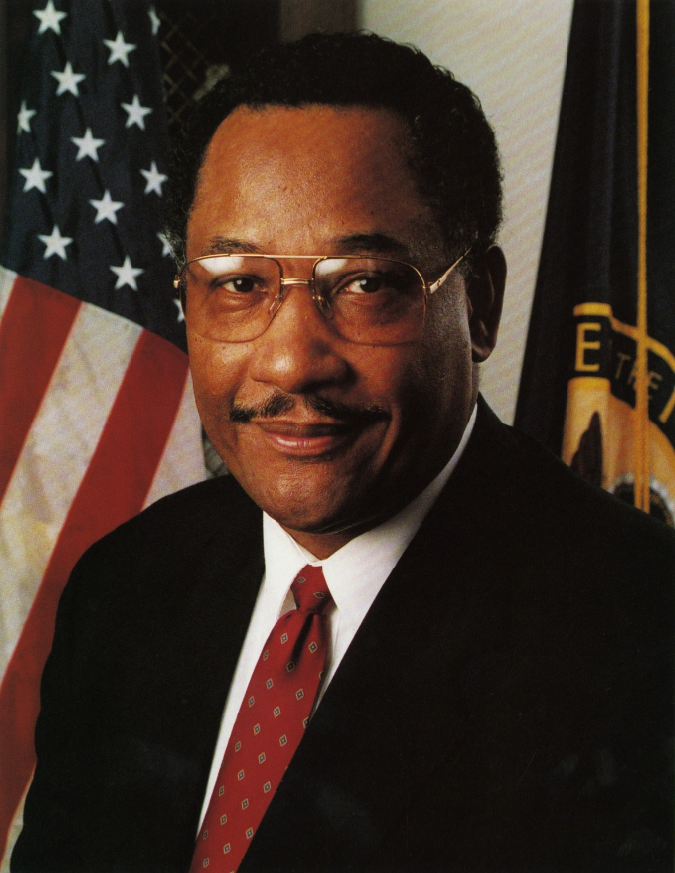
Today, October 4, Lee Patrick Brown turns 89. And if you live in Houston, you have felt his fingerprints on this city whether you know his name or not.
He was born in 1937 in Wewoka, Oklahoma, to Andrew and Zelma Brown, sharecroppers who worked land they would never own. His birth certificate, family lore goes, simply read “Baby Brown.” When the Dust Bowl years scattered Oklahoma families across the West, the Browns loaded into the back of an old truck with several other families — a scene Brown himself has likened to The Grapes of Wrath — and landed on a grape farm outside Fresno, California. He grew up in the small town of Fowler, picking grapes and chopping cotton alongside his parents and six siblings.
Nobody in that world expected him to become a police chief. Nobody expected him to become a mayor. Brown has said he once wanted to be a high school football coach. The police, in his words, “were not the most respected people in the world” in his community.
But a football scholarship to Fresno State University opened a door, and Brown walked through it with everything he had. He earned a bachelor’s degree in criminology in 1960 — and that same year started as a beat cop with the San Jose, California police department. He kept going: a master’s in sociology from San José State in 1964, a master’s in criminology from UC Berkeley in 1968, and a doctorate in criminology from Berkeley in 1970. The sharecropper’s son was now Dr. Brown.
The professor who picked up a badge
Before he ever ran a police department, Brown taught people how to think about one. He established the Department of Administration of Justice at Portland State University in 1968, then took his ideas to Howard University in 1972. In 1974, he became sheriff of Multnomah County, Oregon, and by 1976 he was running the county’s entire Department of Justice Services.
Then, in 1978, Atlanta mayor Maynard Jackson tapped him as the city’s public safety commissioner — the first African American to hold the post. Two years later, Brown found himself leading law enforcement through one of the most terrifying cases in American history: the Atlanta Child Murders. With the city gripped by fear and racial tension running hot, Brown worked to calm the community while his investigators closed in on Wayne Williams, who was ultimately tried and convicted. It was grueling, high-wire leadership — and the nation noticed.
Houston: the department that needed changing
In 1982, Houston mayor Kathy Whitmire appointed Brown chief of the Houston Police Department, making him the city’s first Black police chief. He inherited a department, as one colleague put it, that was “one helluva challenge” — in constant turmoil and badly in need of reform.
Brown’s answer was Neighborhood Oriented Policing: officers assigned to specific beats, building real relationships with the people who lived and worked there, solving problems together instead of just answering calls. The old guard scoffed — they joked the acronym NOP stood for “never on patrol,” dismissing it as a return to walking a beat. But Brown kept
at it, and over the years the officers and the neighborhoods came around. The philosophy he pioneered in Houston became known nationally as community policing, and Brown became known as its father.

Three cities, one cabinet, one city hall
In 1990, New York mayor David Dinkins recruited Brown to run the NYPD — the largest police department in the nation — making him New York’s first Black police commissioner. Two years later, President Bill Clinton came calling. In April 1993, Clinton appointed Brown director of the White House Office of National Drug Control Policy, elevating the office to cabinet level. Brown was the first police officer ever to serve as the nation’s drug czar, and he used the post to push prevention, education, and treatment over punishment alone.
Then came the homecoming. In December 1997, Houstonians elected Lee P. Brown mayor — the first African American to lead the city. He served three terms, from 1998 to 2004, and the record speaks: the METRO light rail system that still runs down Main Street, the return of the NFL to Houston with the Texans, the expansion of the George R. Brown Convention Center, stronger libraries, and a philosophy of neighborhood-oriented government that carried his policing ideas into city hall.
The legacy at 89
Along the way, Brown co-founded the National Organization of Black Law Enforcement Executives (NOBLE), led the International Association of Chiefs of Police, joined the brotherhoods of Alpha Phi Alpha and Sigma Pi Phi, and built a second career as chairman and CEO of Brown Group International. He raised four children with his late wife, Yvonne, and today lives in Houston with his wife, Frances, a retired educator.
Eighty-nine years after a birth certificate read “Baby Brown” in Wewoka, Oklahoma, Lee P. Brown’s life reads like a map of Black possibility in America: from the cotton fields to the classroom, from a San Jose beat to the chief’s office in three of the nation’s biggest cities, from the president’s cabinet to the mayor’s desk in Houston.
He changed the department first. Then he ran the city. Houston is still living in the house he helped build.
Discover more from The Whitsdom Press
Subscribe to get the latest posts sent to your email.
Leave a comment