
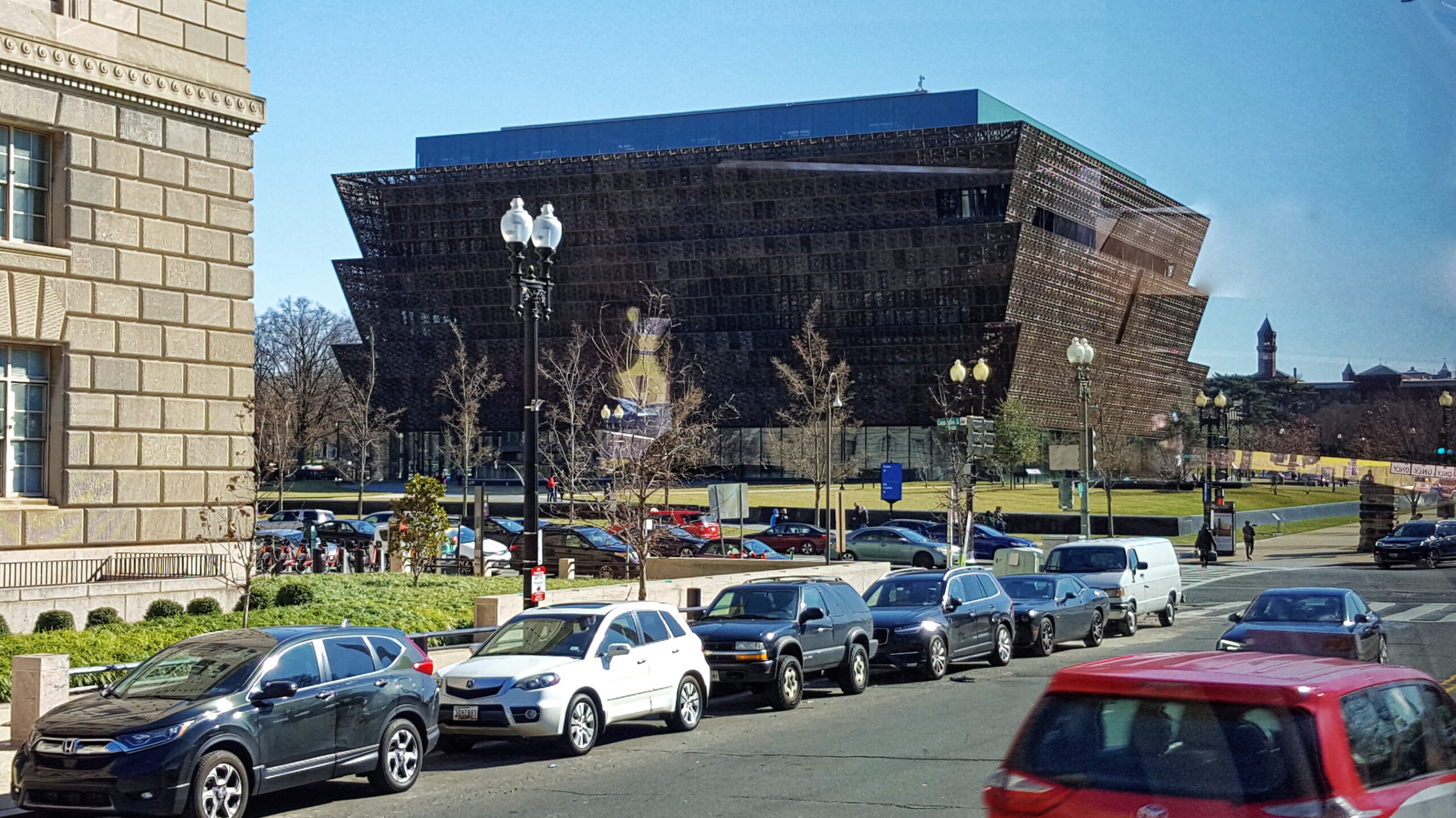
Ten years ago this week, the doors opened on the National Mall and Black America finally got its house.
On September 24, 2016, the Smithsonian’s National Museum of African American History and Culture — the NMAAHC, the Blacksonian, the house our ancestors dreamed of — welcomed its first visitors. This week, the museum marked a full decade with “The Reunion,” a four-day celebration under the theme “Welcome Home: Our Legacy Continues.” And it closes today, Sunday, with one last gathering at the water’s edge.
If you weren’t in D.C. this weekend, here’s what you missed — and why it mattered.
Four days, one family reunion
The Reunion ran September 24 through 27, and the museum treated it like exactly what it called it: a family reunion, not a press event.
Thursday was the anniversary itself, and the museum gave the whole building over to it — activations across the floors, the corona glowing on the Mall the way it has every golden hour for ten years.
Friday brought a special edition of the museum’s “Understanding America” series: “10 Years of Excellence,” a conversation with Lonnie G. Bunch III — the founding director who built this collection out of nearly nothing, and who now serves as Secretary of the entire Smithsonian — moderated by journalist Laura Coates. Bunch is the man who spent years going door to door, asking Black families what was in their attics, and turned those attics into a national archive.
Saturday was for the culture in full gala form. And today, Sunday, “Violet Vibes: A Community Celebration” closes out the weekend at The Wharf — free, family-friendly, daylong programming on the waterfront. Purple everything: guests were encouraged to wear the museum’s signature color all weekend.
Last night: The Purple Ball
Saturday night’s centerpiece was “The Purple Ball: Echoes of the Pearl,” a formal fundraising gala at The Wharf hosted by comedian Bill Bellamy, with performances by Grammy-winning artist and producer Jermaine Dupri & Friends, the legendary DJ D-Nice, and The Renaissance Orchestra. Proceeds go straight back into the museum’s exhibitions, programming, and education initiatives.
The name carries weight. In 1848 — 178 years ago — 77 enslaved people boarded a schooner called the Pearl at that very waterfront, attempting the largest nonviolent escape attempt in American history. Their bid for freedom failed, and many were sold farther South. But the Pearl became a landmark in D.C.’s antislavery story, and the museum chose to anchor its anniversary to that shoreline on purpose: this is a landscape that holds memory, not just real estate.
That is the whole museum in one decision. Nothing here is decoration. Everything is documentation.
Ten years of the house we built
Remember how long this took: generations of Black Americans advocated for this museum, an idea more than a century old before Congress finally acted. Bunch himself secured $250 million in federal funding and fought for the one thing that mattered most: a site directly on the National Mall, between the Washington Monument and the White House, where Black history could never again be treated as a side gallery.
The results, ten years on, are staggering:
• Nearly 14 million people have walked through the building since it opened — visitors from all 50 states and nearly 200 countries.
• More than 1.1 million students and teachers have come through its education programs.
• 65 million-plus visitors have explored the Searchable Museum, the digital platform that carries the collection to people who may never reach Washington.
• The collection itself now holds more than 45,000 objects — from Harriet Tubman’s hymnal to the Tuskegee Airmen’s training biplane to the Ebony Test Kitchen.
And this month the museum added one more: What a Dream Can Do: Building a Collection, Preserving a Legacy, a fully illustrated 320-page catalog from Rizzoli Electa that tells the stories behind the artifacts — how celebrated pieces of Black history actually made their way into the building. It went on sale September 15, right in time for the anniversary.
Even the food got its flowers: Sweet Home Café ran a special anniversary menu from Executive Chef Ramin Coles all weekend.
Why it matters now
Museums are never neutral, and this one never pretended to be. The NMAAHC opened in 2016 into a country arguing with itself about whose history counts — and it answered by putting the receipts on the Mall. The middle passage. Reconstruction. The Great Migration. The movement. Hip-hop. All of it under one bronze corona, in chronological descent and joyful ascent.
Ten years later, with school curricula under political siege and whole subjects being debated out of classrooms, a building that says we were here, we built this, and here is the proof is not a luxury. It is infrastructure.
That’s what “The Reunion” was really about. Not a birthday party — a homecoming. The museum spent a decade acting on the premise that Black Americans are not guests in the American story but its co-authors. This weekend, it invited everybody back to the house to say so out loud.
Welcome home, indeed. Here’s to the next ten.
The National Museum of African American History and Culture is located at 1400 Constitution Ave NW, Washington, D.C., on the National Mall. Admission is free; timed-entry passes are required. “Violet Vibes: A Community Celebration” closes out The Reunion today, Sunday, September 27, at The Wharf.
Discover more from The Whitsdom Press
Subscribe to get the latest posts sent to your email.
Leave a comment