
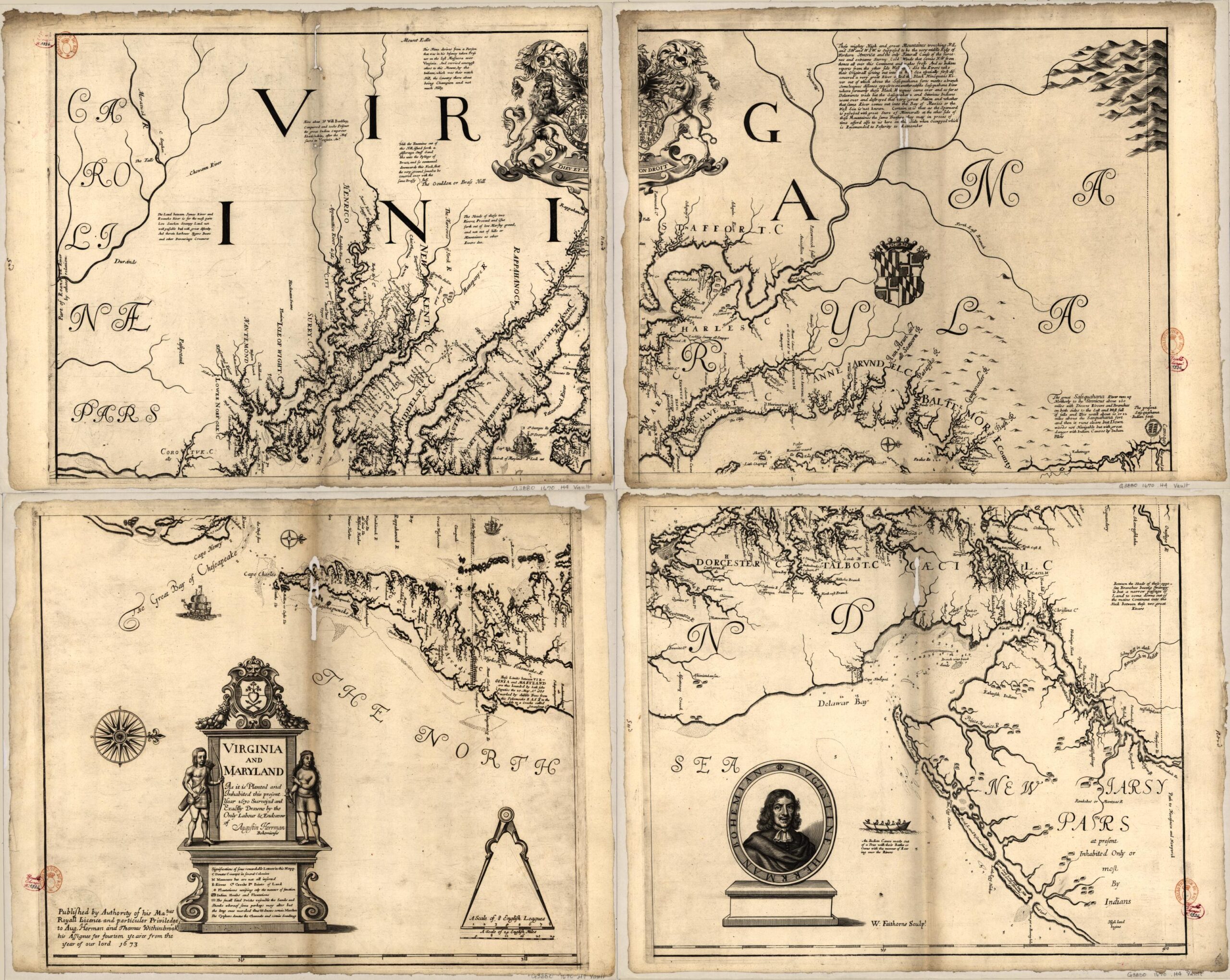
On September 20, 1664 — 362 years ago this week — lawmakers in the Maryland colony did something no English-speaking government in North America had ever done: they made it a crime to marry across the color line. The first anti-amalgamation law in American history did not just forbid love. It built the legal machinery of race itself — and its shadow would stretch for three centuries.
The 1664 Law
In September 1664, the Maryland colonial assembly passed the first anti-amalgamation law in British North America: the first law in American history to restrict marriage partners solely on the basis of “race.” It targeted free English women who married enslaved Black men — unions the assembly condemned as a “disgrace … to our Nation.”
The punishment was brutal and precise. Children born to these couples would be enslaved for life — following the father’s status, not the mother’s — and the mothers themselves would be forced into indentured servitude to their husband’s master for his lifetime. Love across the color line became a pipeline into slavery.
Why It Was Passed
The law was never really about marriage. It was about property, profit, and control. Before 1664, the Chesapeake colonies were more fluid than we imagine: interracial marriage was fairly common among white indentured servants and Black slaves, and even in aristocratic circles — and the children of free women were born free.
But as tobacco planters grew hungry for a permanent, hereditary labor force, that fluidity became a threat. If free women could marry enslaved men and their children were born free, the supply of enslaved labor would leak away with every wedding. The 1664 law plugged the leak — and in doing so, it helped invent “race” as a legal category in America.
The Spread
Maryland set the template, and the other colonies followed. Virginia passed its own anti-amalgamation law in 1691. Massachusetts followed in 1705, North Carolina in 1715, South Carolina in 1717, Delaware in 1721, and Pennsylvania in 1725. Colony by colony, the crime of loving across the color line was written into American law — a legal architecture of racial separation that would outlive the colonies themselves.
Reconstruction Rollback
For a brief moment, it seemed the shadow might lift. During Reconstruction, in the early 1870s, bans on interracial marriage were lifted in several states. But the reprieve was short-lived: by the end of the decade, as Reconstruction was crushed and Jim Crow rose, the bans were void again — back on the books, in some places harsher than before. The law had simply waited out freedom.
The Lovings
In October 1958 — the very same year a letter opener nearly killed Dr. King in Harlem — a grand jury in Virginia indicted a young married couple: Mildred Loving, a Black woman, and her white husband, Richard. Their crime was being married. They pleaded guilty and received one-year suspended sentences, on the condition that they leave Virginia and not return together for 25 years.
They left. Then they fought back. Their appeal climbed all the way to the United States Supreme Court, and in 1967, Loving v. Virginia struck down Virginia’s law — and with it, the anti-miscegenation laws of 15 other states. Three centuries after Maryland first criminalized love across the color line, the Lovings ended it.
The Shadow
The shadow lasted centuries. These laws stayed on the books until 1967 — more than three hundred years after Maryland’s assembly first made marriage across the color line a crime. And even then, the words lingered on: Alabama did not remove its anti-miscegenation clause from the state constitution until a referendum in the year 2000. Three hundred and thirty-six years. That is how long it took to fully erase what Maryland wrote in 1664.
Discover more from The Whitsdom Press
Subscribe to get the latest posts sent to your email.
Leave a comment