
Opening
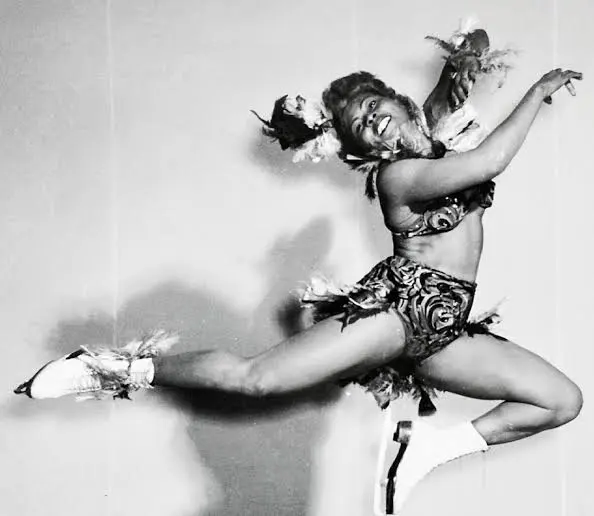
Twenty-five years ago today, on September 29, 2001, Mabel Fairbanks died in a hospital in Burbank, California, at eighty-five. The obituaries called her a pioneer, which is the word newspapers use when the thing a person did was obvious and the reason nobody else did it is ugly. Fairbanks was one of the most gifted skaters of her generation, and she never competed in a single sanctioned event. The rinks wouldn’t let her in. The clubs wouldn’t take her. The big touring ice shows told her, flat out: “We don’t have Negroes in ice shows.”
She heard all of that, and she skated anyway. Then she did the most elegant revenge the sport has ever seen: she became the coach behind the champions, and when the establishment finally had to reckon with her, it put her in its Hall of Fame.
The Girl Who Watched the Ice From Above
Mabel Fairbanks was born on November 14, 1915, in the Florida Everglades, the daughter of an African American father and a mother whose own mother was Seminole. She was one of fourteen children in a house where, as she later remembered, her mother took in every stray kid off the street. She was orphaned at eight. After a stretch with a teacher who treated her like a maid, she followed a brother to New York City, where she eventually landed a babysitter’s job in an apartment overlooking Central Park.
That’s where everything started. From that window she watched the skaters twirling on the park’s frozen lake, and she ached to be out there with them. She was barely more than a child with nothing, so she did what poor kids have always done: she improvised. She haggled a pair of used skates down to about a dollar at a pawn shop. They were two sizes too big, so she stuffed the toes with cotton. She learned her balance going up and down the stairs of her building, then took her cotton-packed skates to the ice.
But this was the 1930s, and the rinks had their rules. A cashier turned her away from the local rink because of her race. Fairbanks came back. And came back. As she put it: “Blacks didn’t skate there. But it was a public place, so I just carried on.” Eventually the manager let her in — and the talent on the ice did the rest. Maribel Vinson Owen, a nine-time U.S. champion, saw her and started giving her technical advice on the condition of secrecy. “This is our secret,” Owen told her. “Don’t tell anyone that I’m working with you giving you lessons, because you’re not going anywhere. They’re not going to allow you in competition.” At home, her uncle Wally — an ice-cream factory worker — built her a six-foot-by-six-foot practice rink out of dry ice in her own room. She even skated in pink and purple boots, years before anyone thought to make that a statement.
“We Don’t Have Negroes in Ice Shows”
Here’s what persistence couldn’t outrun: the institutions. Fairbanks was barred from joining any skating club, barred from every competition, barred from the national qualifying events for the Olympics. It didn’t matter that her skills were competition-quality. The door was bolted, and the bolt had her color on it.
When she tried to be considered for the big touring productions — the Ice Capades and the Follies — she was turned down cold and told, in words she remembered for the rest of her life: “We don’t have Negroes in ice shows.” Even her idol couldn’t make room. Fairbanks had fallen for skating after watching Sonja Henie in the 1936 film One in a Million; she wrote Henie a letter that went unanswered, and Henie later barred her from competing in one of her ice shows.
And yet — in a 1998 interview, Fairbanks said something astonishing: “If I had gone to the Olympics and become a star, I would not be who I am today.” That’s the voice of a woman who understood that the locked door had built her, not broken her.
Abroad, They Let Her Shine
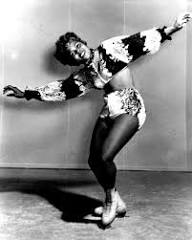
If America wouldn’t give her a stage, the rest of the world would. Fairbanks took her professional career on the road: she skated with Belita in Rhapsody on Ice at the Teatro Blanquita in Havana; she toured internationally with the Ice Capades in Mexico; she performed in USO nightclub shows in France and Germany. Back home she played the Apollo Theater in Harlem, the Brooklyn Academy of Music, the Renaissance Ballroom, and Los Angeles nightclubs — skating on ice tanks installed in rooms never meant for ice. In 1945, a clip of her skating made it into All-American News, the first newsreel made for Black audiences.
She came home to the same country every time. After returning to the U.S., she walked up to the Pasadena Winter Gardens and found a sign that read “Colored Trade Not Solicited.” Her uncle had newspaper articles written about it and handed them out everywhere until they finally let her in. Even the small victories had to be fought for, piece by piece.
The Coach Who Built Champions
Fairbanks retired from performing in 1948 and walked straight into the second act that would make her immortal. She became a coach — and not just any coach. Her students included Olympic and World champions Tai Babilonia and Randy Gardner, the 1979 World pairs champions; Olympic gold medalists Scott Hamilton and Kristi Yamaguchi; Debi Thomas, the first Black woman to win a U.S. national singles title and a world champion; Atoy Wilson, the first Black skater to win a U.S. national title; and Tiffany Chin.
Read that roster again and sit with it. The woman America wouldn’t let compete taught the champions America would cheer for. She pushed the Culver City Skating Club in Los Angeles to admit its first Black member in 1965. And in 1997, the U.S. Figure Skating Hall of Fame did what it had to do: it inducted Mabel Fairbanks — the first Black skater ever inducted, a woman who had never been allowed to skate a single competitive program. A few weeks after her death, she was posthumously inducted into the International Women’s Sports Hall of Fame.
Skatingly Yours
When she signed autographs, Fairbanks wrote “Skatingly Yours” — and those words are etched on her plaque at the Hollywood Forever Cemetery in Los Angeles, next to a pair of figure skates. U.S. Figure Skating now runs the Mabel Fairbanks Skatingly Yours Fund, which supports the training of promising Black, Indigenous, and other skaters of color — money flowing toward the very kids the old rinks would have turned away.
That’s the arc: barred from the ice, then the maker of champions, then the Hall of Fame, then a fund in her name that keeps prying the door open wider. Twenty-five years after she left us, the lesson is the same one she told her students of color when they took the ice: it doesn’t matter what color you are — go out and give it your best. They told Mabel Fairbanks there were no Negroes in ice shows. She became the reason they can’t say that anymore.
Discover more from The Whitsdom Press
Subscribe to get the latest posts sent to your email.
Leave a comment