
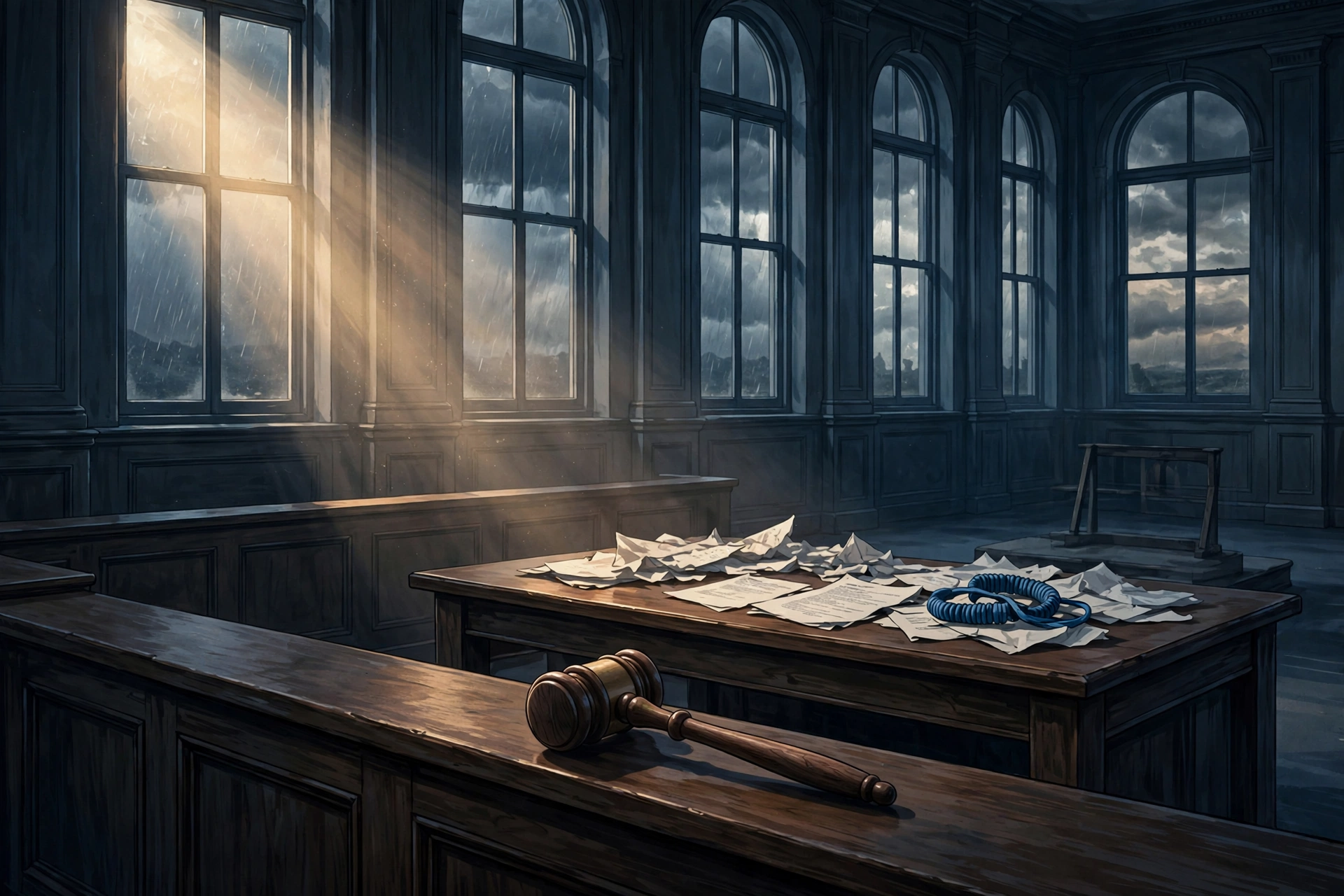
PART ONE: THE MISTRIAL
In January 2023, Lindsay Clancy committed an act no parent should ever be accused of. Inside her Duxbury, Massachusetts home, she strangled her three children — Cora, 5, Dawson, 3, and 8-month-old Callan — with exercise bands, then tried to take her own life. She survived. She has never disputed that she killed them.
What she did dispute was whether she could be held criminally responsible. She pleaded not guilty by lack of criminal responsibility — Massachusetts’ version of what most of us call an insanity defense. Her lawyers argued she was in the grip of postpartum psychosis and dangerously overmedicated: thirteen psychiatric medications prescribed across multiple providers who never shared one clear picture of what she was taking. In their telling, she could not understand what she was doing or control her own conduct.
Prosecutors told a very different story. They said the killings showed planning, timing, and purpose — the marks of someone who knew exactly what she was doing.
The trial ran about five weeks. More than eighty witnesses. Three hundred exhibits. Then the jury went off to deliberate — and stayed there for roughly 36 to 38 hours.
On Friday, September 4, 2026, Judge William Sullivan declared a mistrial. The jury was deadlocked 11 to 1. Eleven jurors voted not guilty by lack of criminal responsibility. One voted guilty. A single honest vote was all it took to send everyone home without a verdict.
Before the mistrial was declared, there was one more burst of drama. Defense attorney Kevin Reddington made a last-minute emergency appeal to the Massachusetts Supreme Judicial Court, accusing the holdout juror of ‘bias against those who suffer from debilitating mental illness’ and invoking the Americans with Disabilities Act. The judge granted a one-hour stay. The high court denied the request. The mistrial stood.
Since then, some jurors have started talking. An Army veteran juror named Dargie told ABC News that the holdout spent a lot of deliberation time scrolling on his phone, couldn’t point to evidence to support his position, and at one point picked up the exercise band from the evidence table and tied it around a water bottle. Juror No. 5 told WBZ-TV the holdout wasn’t the only one who started out leaning guilty — she did, too — and described the deliberation room as a place full of ‘big personalities.’
So where do things stand now? Lindsay Clancy is still charged with murder. A retrial is possible. So are plea talks. Her husband Patrick has spoken publicly since the mistrial, and a status hearing was set for September 29.
PART TWO: THE UNMASKING
Here’s where the story takes a turn that should bother all of us — no matter what you think about the verdict that never came.
The holdout was the only Black man on the 12-person panel, a jury of nine women and three men. And once the mistrial was declared, one man’s single vote became the whole story.
An NBC10 Boston investigation took a hard look at the holdout juror’s past — and did it without naming him. What they found: he had previously faced domestic violence charges. Then a blogger known as Turtleboy went further, posting the alleged name and photograph of the person he believed to be the holdout juror, handing a private citizen’s identity to the entire internet over a single vote.
Think about what we ask of jurors. Answer the summons. Sit through weeks of testimony no one should ever have to hear. Deliberate for days. Vote your conscience. This man did all of that — and his reward was having his name, his face, and his past splashed across the internet for strangers to tear apart.
On September 14, 2026, Judge Sullivan stepped in. He impounded the jury list indefinitely, writing that the case’s ‘daily, divisive attention’ created a ‘real and present risk of personal harm to the jurors [and] to the integrity of their service.’ At least one juror had asked for the impoundment to be extended indefinitely. The judge also made clear that the order doesn’t stop any juror from identifying themselves or speaking publicly if they choose to.
Former prosecutor Margaret McLean put the worry in plain terms: ‘Are we going to not want to serve on a jury because we’re afraid that our past could come out for everybody to see publicly?’ Set the Clancy case aside for a moment. That question is about every trial to come. If serving on a jury means your worst moments can be dug up and broadcast the minute your vote is unpopular, who is going to answer the next summons?
The man identified online has since spoken to the outlet Fugitive TV. He says he disclosed his past — including a 2021 arrest — during jury selection, describes the other jurors as ‘activists,’ and insists his vote was based on the evidence. You don’t have to take his word for it. But the principle doesn’t depend on him: he did what the system asked of him, and the system owes him protection in return.
So what does all of this mean for the rest of us? Juries only work if ordinary people are willing to walk into that box, listen hard, and vote honestly — especially when the honest vote is the unpopular one. If we turn one unpopular vote into a public punishment, we won’t get better verdicts. We’ll get emptier jury pools. And that’s a loss for everyone, on every side of every courtroom.
My TikTok Take: Mz. Whitsdom Reacts
Discover more from The Whitsdom Press
Subscribe to get the latest posts sent to your email.
Leave a comment