
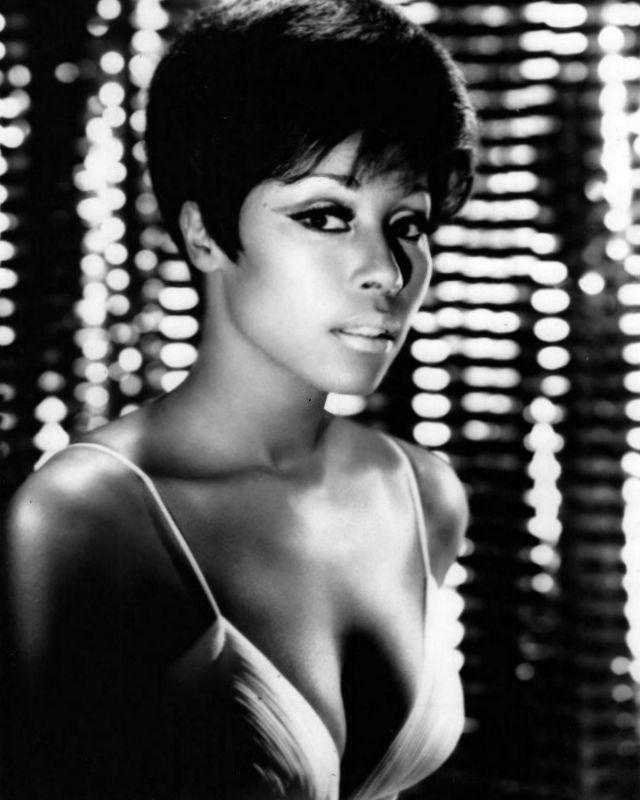
Fifty-eight years ago tonight, a nurse walked into America’s living rooms and changed television forever.
On September 17, 1968, NBC aired the first episode of Julia — a gentle half-hour sitcom about Julia Baker, a widowed nurse raising her young son on her own. It didn’t look like a revolution. But it was one, because Julia Baker was played by Diahann Carroll — the first Black woman to star in her own primetime network series as a professional woman, not a servant.
Before that night, the only Black characters TV had offered in leading roles were stereotypes: Beulah‘s maid in the early 1950s, Amos ‘n’ Andy‘s caricatures. Bill Cosby had co-starred on I Spy three years earlier, but a Black woman carrying a show as a peer of her white co-stars? That had never happened. Julia was a first.
The woman behind Julia
Carroll wasn’t some newcomer the network gambled on. She was already a star. The Bronx-born singer had conquered Broadway, winning a Tony Award in 1962 for No Strings — the first Black woman to win Best Actress in a musical. She’d held her own opposite James Earl Jones in the film Claudine, earning an Oscar nomination, and had sung her way through Hollywood musicals like Carmen Jones.
In fact, she almost said no. Years later, she admitted she thought the show wouldn’t last: “I really didn’t believe that this was a show that was going to work. I thought it was something that was going to leave someone’s consciousness in a very short period of time.” She only dug in after learning that Hal Kanter, the veteran screenwriter who created the series, thought she was too glamorous for the part. Changing her hair and mastering the script, she won him over — and made history.
The show itself was deliberately quiet. Julia Baker’s husband had been killed in Vietnam, and the series followed her work life as a nurse and her home life with her little boy, Corey, played by Marc Copage. There was no laugh track — unusual for a late-1960s sitcom — and the writing, by composer Elmer Bernstein’s standards of television, kept things warm and middle-class.
America watched. Julia finished its first season ranked No. 7 in the ratings, and Carroll took home the Golden Globe for Best Actress in a Comedy in 1969, along with an Emmy nomination. Three seasons, 86 episodes, ending March 23, 1971.
What the door cost her
Here’s the part people forget: being first nearly broke her.
Critics and some viewers hammered the show for being too sanitized — a “colorblind” fantasy that showed a prosperous Black nurse while a third of Black families lived in poverty, a feel-good version of integration that dodged the real fight. The criticism landed on Carroll personally. The stress of carrying the whole conversation sent her to the hospital twice with stress-related symptoms.
She pushed back the only way she knew how, with plain talk. Asked why the show didn’t reflect “real” Black life, she told TV Guide in 1968: “I don’t know of any TV program that is a real reflection of white life. All television is divorced from reality. Look at The Beverly Hillbillies or That Girl.”
She had a point. No one demanded The Andy Griffith Show carry the weight of an entire race. But because she was first, everything about Julia Baker was treated as a statement about all Black women. That’s the tax of being a trailblazer — you don’t just play a character, you carry a people.
What the door opened
And still, the door stayed open. Carroll kept walking through rooms television had locked.
In 1984 she joined ABC’s Dynasty as Dominique Deveraux — glamorous, scheming, and utterly unapologetic — becoming the first prominently featured Black character on a primetime soap opera, then carried the role onto its spinoff The Colbys. Later generations knew her from A Different World, Grey’s Anatomy, and White Collar. In 2011 she was inducted into the Television Hall of Fame.
Think about the line that runs from Julia Baker to every Black woman who has headlined a series since — the Claire Huxtables, the Olivia Popes, the Issa Dees, the Quinta Brunsons. Carroll didn’t get to play a messy, complicated antiheroine. She had to be perfect so the rest could be human. That’s the bargain firsts make, and she paid it with grace.
The legacy she carried home
Diahann Carroll died on October 4, 2019, at 84, after a long private battle with cancer, at home in Los Angeles with her daughter by her side. She had asked that the world not know she was fighting.
Fifty-eight years after that September night, Julia looks modest by today’s standards. But modesty was the strategy. Carroll slipped a Black professional woman into America’s living rooms in 1968 — the year of assassinations and burning cities — and made her beloved. She took the criticism, the hospital stays, and the impossible expectations, and she held the door.
That’s why we say her name. Not just for the first, but for everything after. Rest easy, Ms. Carroll — the thrill of what you started is still on every screen.
Discover more from The Whitsdom Press
Subscribe to get the latest posts sent to your email.
Leave a comment