
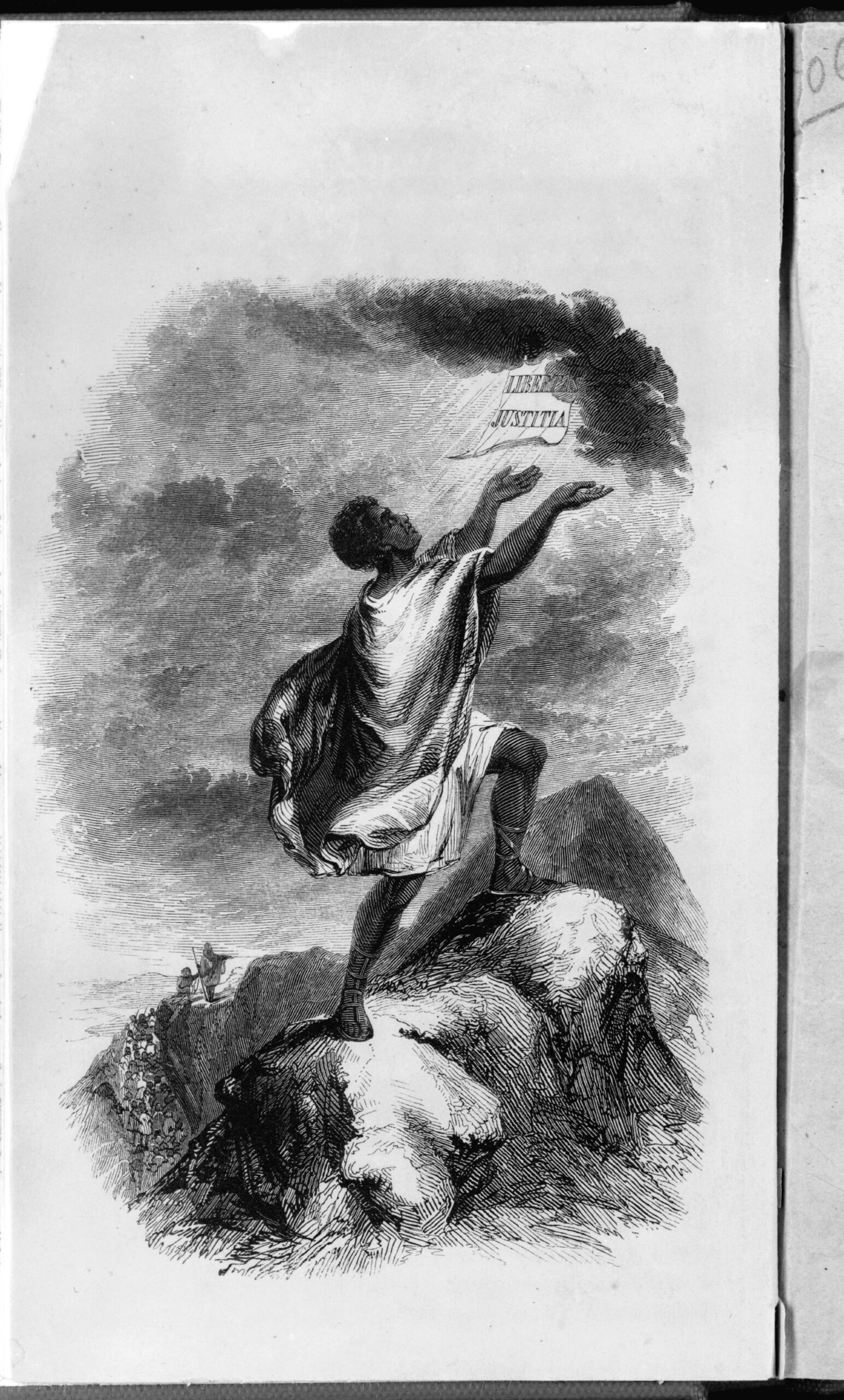
One hundred ninety-seven years ago today, a free Black man in Boston paid out of his own pocket to print a pamphlet — and signed the title page with the date: “Written in Boston, State of Massachusetts, September 28, 1829.” The date was also his own birthday. His name was David Walker, and the pamphlet was *Walker’s Appeal, in Four Articles; Together with a Preamble, to the Coloured Citizens of the World.* It called on enslaved Black people to resist their bondage — by any means necessary — and it warned white America that God was watching. The South’s response was immediate and extraordinary: within months, states across the slaveholding region passed emergency laws to keep the Appeal out, criminalizing not just its printing and distribution but its very possession.
This is the story of a pamphlet that terrified a nation. Not an army. Not a riot. Words.
Born Free in Wilmington
David Walker was born on September 28, 1796, in Wilmington, North Carolina. His father was enslaved and died before he was born; his mother was free — and under the law of partus sequitur ventrem, “the offspring follows the womb,” her status became his. Walker grew up a free Black boy in a slave state, and he never forgot what it looked like from the outside. As a young man he traveled through the South, watching slavery up close, before settling in Boston around 1825.
In Boston he built a life the way so many free Black people of the era did: one hard-won brick at a time. He ran a used-clothing shop. He sold subscriptions and wrote for Freedom’s Journal, the first Black-owned newspaper in America. He joined the Massachusetts General Colored Association and the Prince Hall Freemasons. Boston’s Black community in the 1820s was politically sharp and organized, and by 1828 Walker had become one of its loudest voices against slavery — and its loudest critic of the white abolitionists who still insisted on asking slaveholders nicely.
What the Appeal Actually Said
The Appeal was not addressed to white people. That’s what made it different from nearly everything else in the abolitionist press of its day. Its full title runs to the “coloured citizens of the world” — and “in particular, and very expressly,” to those in the United States. Walker spoke directly to Black people, calling them “my dearly beloved brethren,” and told them plainly: you do not have to wait for permission to be free.
The pamphlet’s four articles took aim at everything that held slavery up. The first argued that American slavery was the cruelest system of bondage in human history — that the “white Christians of America” treated enslaved people worse than devils ever had. The second took on enforced ignorance: Walker wrote that slaveholders kept Black people illiterate on purpose, because an educated person would understand exactly what was owed them. The third exposed the hypocrisy of Christian slaveholders — “pretenders to Christianity,” he called them. And the fourth tore into the American Colonization Society, the white-led project to ship free Black people to Liberia, which Walker saw for what it was: a plan to remove free Black people from the country before their example infected the enslaved.
He answered Thomas Jefferson directly, too — Jefferson, who had written that Black people were inferior by nature. And then he said the thing that made the pamphlet a weapon: resistance, he wrote, is the most successful method to attain our liberty. Don’t just endure. Fight back.
The South Tried to Criminalize a Pamphlet
Walker knew his audience could not walk into a bookshop in Charleston and buy a copy. So he moved the Appeal the way dangerous information has always moved: through people. Black sailors carried copies south; the pamphlets changed hands in port cities and traveled inland through Black communication networks. Soon copies surfaced in Savannah, in New Orleans, in Charleston — twenty in Georgia’s capital, thirty in Virginia, and before the year was out, more than two hundred had breached the Carolinas.
The panic was without precedent. The mayor of Savannah wrote to Boston’s mayor, Harrison Gray Otis, demanding Walker be punished for his “highly inflammatory work.” Otis replied that the pamphlet was “extremely bad” — but nothing in Massachusetts law made it illegal, and his hands were tied. So the South did what the South did: it changed the law. Georgia’s legislature convened on December 21 and passed new laws before the year ended, making the circulation of “insurrectionary literature” a capital offense. Georgia and North Carolina barred Black sailors from even entering their ports. North Carolina enacted what scholars have called the most repressive measures in its history against enslaved and free Black people. Louisiana and Virginia tightened their own codes — restricting free Black people and banning the teaching of literacy to the enslaved. Black people in Charleston and New Orleans were arrested for simply holding a copy. Georgia offered ten thousand dollars for Walker alive, one thousand dead.
Let that sit for a moment. A whole region rewrote its criminal code because of seventy pages written by a clothing dealer in Boston.
A Death in 1830, Words That Wouldn’t Die
Walker published three editions of the Appeal between 1829 and 1830, expanding and sharpening his arguments each time. He did not live to see the fourth. In the summer of 1830, just thirty-three years old, David Walker was found dead in his Boston shop. The official cause was tuberculosis, which also claimed his infant daughter that year. But from 1830 to this very day, the rumor has never quite died: that he was poisoned for what he wrote.
A year later, Nat Turner led the bloodiest slave rebellion in American history — and many white Southerners blamed Walker, dead or not, for planting the idea. Frederick Douglass would later say the Appeal “startled the land like a trump of coming judgment.” That’s the phrase that survives. Walker demanded that Black people see themselves as agents of their own liberation, not as objects of someone else’s pity — an idea too radical for most white abolitionists of his day, and apparently too dangerous for an entire region’s law books.
Nearly two centuries later, the instinct that made the South criminalize a pamphlet hasn’t gone extinct — it’s the same instinct behind every fight over which books get to stay on the shelf. Which is exactly why David Walker still belongs in the conversation. On September 28, 1829, he wrote his own name into history and dared everyone else to read it. One hundred ninety-seven years later, we’re still reading. They couldn’t stop him then, and they can’t stop him now.
Discover more from The Whitsdom Press
Subscribe to get the latest posts sent to your email.
Leave a comment