
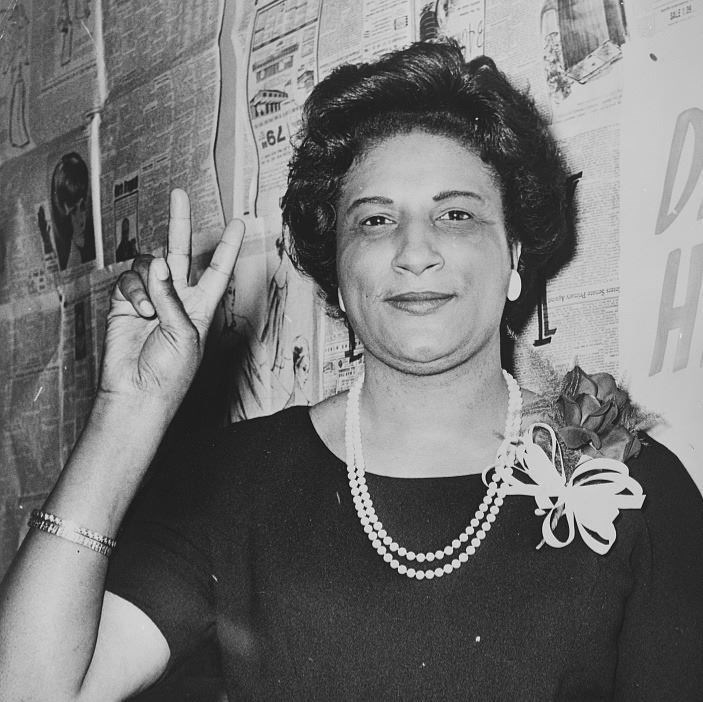
You’ve probably never heard of Constance Baker Motley. That’s a shame, because she is one of the reasons American law looks the way it does today. Before she was 50, she’d written the legal complaint that ended school segregation, argued — and mostly won — before the U.S. Supreme Court, and taken a seat on the federal bench that no Black woman had ever held.
Her name doesn’t come up in the group chat. It doesn’t trend. It should. Here’s why Judge Motley’s story hits different right now.
Born to Fight
Constance Baker was born on September 14, 1921, in New Haven, Connecticut — the ninth of twelve children of parents from the Caribbean island of Nevis. Nobody in her neighborhood expected her to become a lawyer. The plan, as far as anyone around her was concerned, was for her to become a hairdresser.
Then came the day that rerouted her life. At 15, Constance was turned away from a public beach because she was Black. She went home and started devouring everything she could find about Black history. By her late teens, she was president of her local NAACP youth council.
A few years later, a white philanthropist named Clarence W. Blakeslee heard 18-year-old Constance give a speech at a community social center. He was so moved by her oration that he offered to pay for her college and law school education. She took him up on it — all the way to Columbia Law School.
The Chief Courtroom Tactician
After law school, Motley joined the NAACP Legal Defense and Educational Fund in 1946. She was the only woman attorney in the room, working under chief counsel Thurgood Marshall. She helped write the legal briefs in Brown v. Board of Education, and hers is the only woman’s name on the briefs for the 1954 case that outlawed segregated schools.
Then she started showing up at the highest court in the land. Motley became the first Black woman to argue before the U.S. Supreme Court — and she didn’t just show up. She argued ten landmark civil rights cases and won nine of them.

When James Meredith needed a lawyer to force the University of Mississippi to admit him in 1962, Motley ran point on the legal campaign. She made 22 trips to Mississippi for that case. She defended Martin Luther King Jr. in Birmingham, visited him in jail, stood on the podium at the 1963 March on Washington, and helped get 1,100 Black children reinstated in school after they were expelled for joining the protests. The New York Times would later call her “the chief courtroom tactician of the civil rights movement.”
First After First After First
After two decades in the trenches of the South, Motley came home to New York and started collecting firsts. In 1964 she became the first Black woman elected to the New York State Senate. In 1965 she became the first woman elected Manhattan Borough President. And in 1966, President Lyndon B. Johnson appointed her to the U.S. District Court for the Southern District of New York — the first Black woman in American history to serve as a federal judge.
On the bench she ruled on cases covering housing discrimination, Medicaid benefits, and prisoners held unconstitutionally in solitary confinement. She served with distinction until her death in 2005 at age 84.
But here’s the part nobody puts on the poster: at the LDF, she was paid less than the men doing the same work, and she was passed over to lead the organization when Marshall left. She blamed gender discrimination, and she was right. Even after her extraordinary record, she was never nominated to the federal appeals court. Firsts don’t protect you from the system — she moved through it anyway.
Why She Matters Right Now
Her aspiration, in her own words, was “dignity for all people.” She wrote that long before it was a hashtag. And she built it case by case — a school in Mississippi, a beach in Connecticut, a hospital’s Medicaid ward, a prison cell.
When the courts are deciding everything from what we can read to who gets to vote, Motley’s story is a reminder of what it looks like when a Black woman decides the law should work for everybody and refuses to take no for an answer. She kicked doors down knowing the building was rigged — and she held them open for the rest of us.
Want to go deeper? Her son, Joel Motley III, produced an award-winning short documentary called The Trials of Constance Baker Motley, and Harvard scholar Tomiko Brown-Nagin wrote the definitive biography, Civil Rights Queen. Start with the film. You’ll walk away mad she wasn’t in your history book — and determined to say her name.
Discover more from The Whitsdom Press
Subscribe to get the latest posts sent to your email.
Leave a comment