
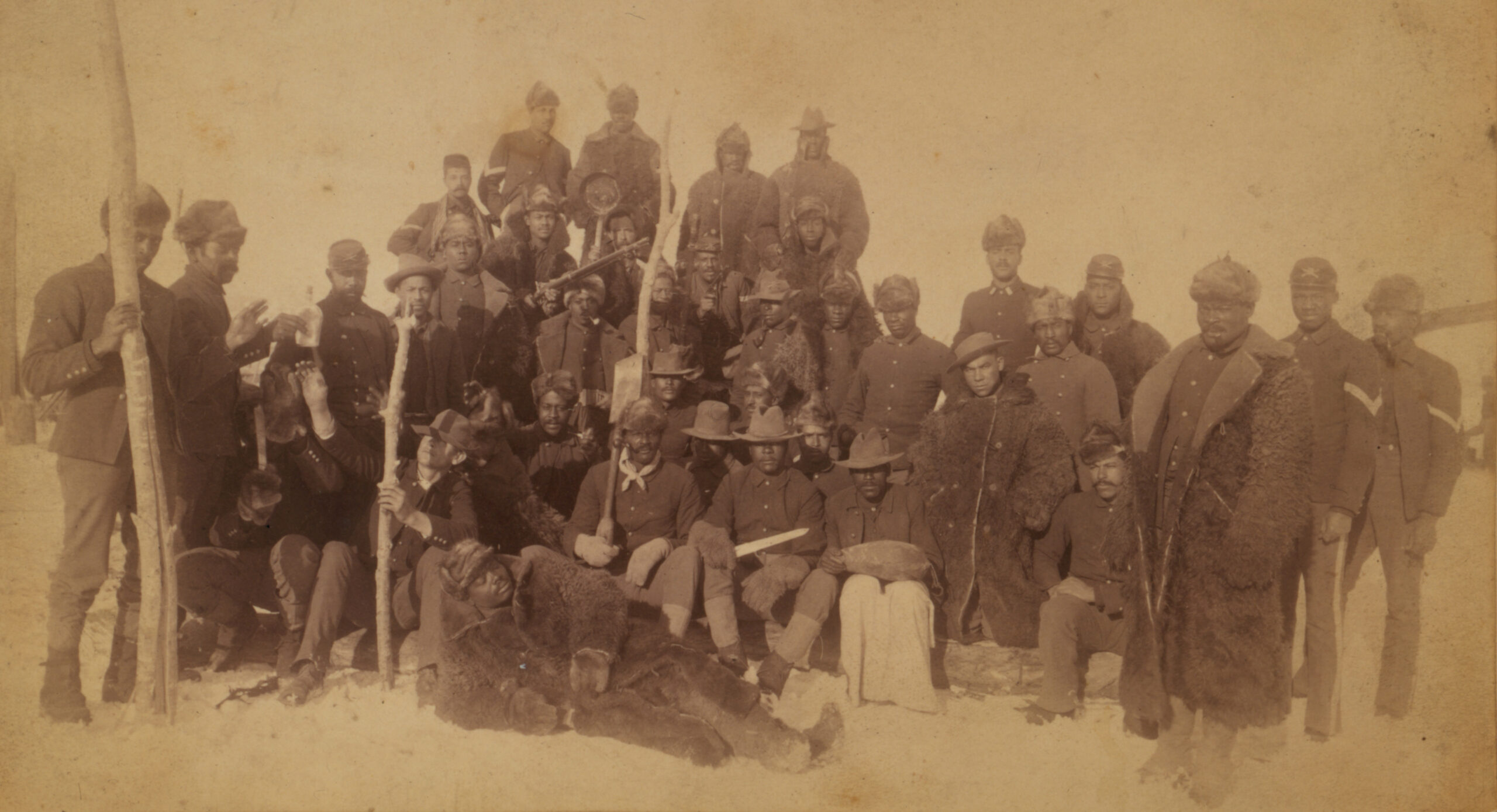
On September 21, 1866 — 160 years ago today — two of the most storied regiments in American military history were born. That day, in New Orleans and at Fort Leavenworth, Kansas, the U.S. Army formally organized the 9th and 10th Cavalry — Black troopers in the peacetime Regular Army, bound for the harshest frontier in the nation. Texas was their first proving ground. And 160 years later, their story still rides.
The Law
On July 28, 1866, Congress passed the Army Reorganization Act, authorizing six Black regiments in the peacetime Regular Army — the 9th and 10th Cavalry and the 38th, 39th, 40th, and 41st Infantry. It was the first time in U.S. history that all-Black regiments would serve in the regular, peacetime Army.
Nearly 200,000 Black men had served in the Civil War, and their service had shattered racist doubts about Black soldiers. Now the nation was asking them to serve again — in uniform, in the Regular Army, in peace.
September 21, 1866
On September 21, 1866, the 9th Cavalry was formally organized in New Orleans, Louisiana, under Col. Edward Hatch — and the 10th Cavalry was organized at Fort Leavenworth, Kansas, under Col. Benjamin Grierson.
The 9th recruited from Kentucky and Louisiana, and its recruits assembled in New Orleans, where empty cotton presses served as barracks. Then cholera struck: the epidemic killed 29 soldiers between October and December 1866. But the regiment endured. By the end of March 1867, the 9th stood near full strength at 885 enlisted men. Privates earned $13 a month on five-year enlistments, and each regiment had a chaplain who taught many men to read and write for the first time.
Forged in Texas
Texas was their proving ground. The 9th Cavalry was ordered to San Antonio, arriving in early April 1867 to begin a mission that would last for years — with Troops L and M sent straight to Brownsville. The 9th spent years based in Texas, and in 1875 the regimental headquarters of both the 9th and 10th Cavalries moved to Fort Concho in West Texas.
They guarded mail and stagecoach routes, pursued outlaws and cattle thieves, and patrolled thousands of miles of some of the harshest terrain in the country. The 10th alone traveled nearly 35,000 miles of unmapped territory, opening 300 miles of new roads and laying over 200 miles of telegraph lines.
In 1869, the four infantry regiments were consolidated into the 24th and 25th Infantry. Together with the 9th and 10th Cavalry, those four regiments are the core of what history remembers as the Buffalo Soldiers — active from 1866 to 1951.
The Name
The nickname came from the Plains Indians themselves. The theories vary: some say the soldiers’ dark, curly hair resembled buffalo fur; others say their bravery in battle recalled the way buffalo fight. The Buffalo Soldiers National Museum traces the name to Cheyenne warriors in 1867 — the Cheyenne translation: “Wild Buffalo.”
By law, the Buffalo Soldiers’ officers were white. But one man broke through: Henry Ossian Flipper, who graduated from West Point in 1877 and became an officer of the 10th Cavalry.
Why It Still Matters
One hundred and sixty years after the 9th and 10th Cavalry first mustered, the Buffalo Soldiers stand as a testament to Black courage, discipline, and sacrifice in a nation that too often refused them dignity. They rode the hardest country in America, mapped it, wired it, and guarded it — all for a country still deciding whether Black men deserved to wear its uniform.
Texas made them. They helped make Texas. And their story still rides.
Discover more from The Whitsdom Press
Subscribe to get the latest posts sent to your email.
Leave a comment