

Before the baby-mama wars, the tattoos, the fights, the Instagram Lives, the jail calls, the reality shows and relationships that seemed to change depending on what day you opened your phone, there was Blueface. Born Johnathan Jamall Porter, Blueface was a young Los Angeles rapper whose strange, offbeat flow helped make him famous. “Thotiana” became the record that pushed him into the mainstream. People debated whether he could rap, copied his style, made memes and kept his name circulating.

But eventually, the music wasn’t the only reason people were watching. His life became the show. Jaidyn Alexis. Chrisean Rock. Neveah. His mother, Karlissa Saffold. Children. Girlfriends. Ex-girlfriends. Fights. Breakups. Makeups. Pregnancy announcements. Family arguments. Jail. Reality television.
Somewhere in the middle of all of that, Blueface stopped being just a rapper with a messy personal life. His personal life became part of the product. That is what I call The Blueface Effect. And this story is much bigger than trying to figure out which woman Blueface really loved.
Before Everybody Else, There Was Jaidyn Alexis
You can’t start this story with Chrisean Rock. Before Chrisean became a household name in the world of reality television and internet drama, Jaidyn Alexis had history with Johnathan Porter. That’s important. Jaidyn knew the man before millions of strangers became obsessed with Blueface. They share two children, Javaughn and Journey, and their relationship has gone through enough breakups, reunions and public ups and downs to fill a reality show of its own.
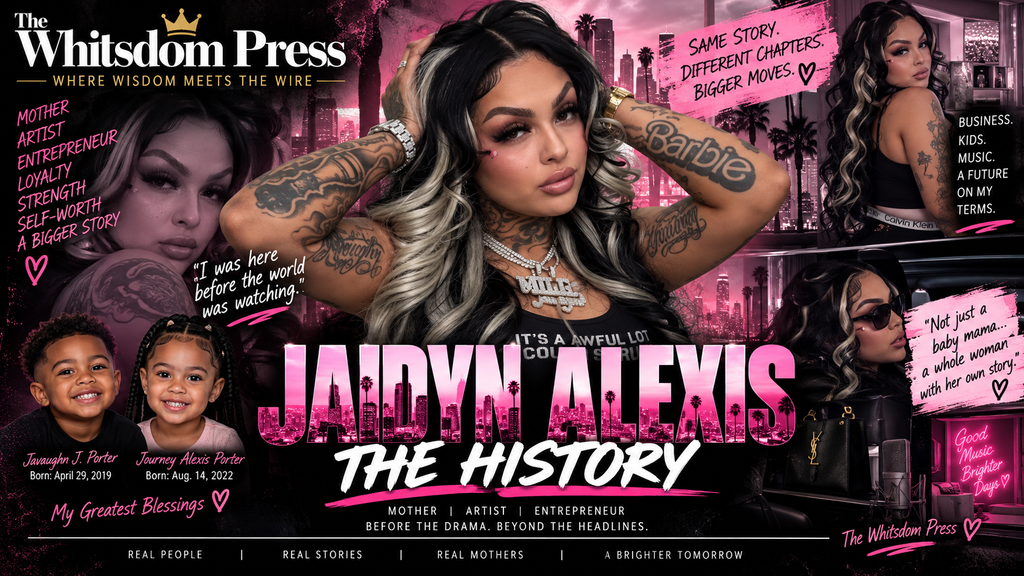
There’s something powerful about history. History says, I knew you before the money. History says, I knew you before everybody wanted a picture. History says, We have children together. And sometimes history whispers something that can keep people connected much longer than they probably should be: He’s eventually coming back home.
Jaidyn occupied a very different position from the women who came later. She wasn’t simply dating a famous rapper. She had built a family with the man underneath the celebrity. But being there first doesn’t guarantee being treated best. And longevity doesn’t always mean a relationship is healthy. Sometimes it simply means you’ve survived it longer.
Chrisean Rock Didn’t Stay a Supporting Character
Before Baddies , before Chrisean became a reality television star in her own right, there was Blue Girls Club . Blueface brought a group of women together under one roof for an online reality-show-style experiment. There were cameras. Personalities. Competition. Arguments. Fights. Sexual tension. Women trying to stand out. And, sitting in the middle of all of it, was Blueface.

This is one of the most important pieces of the entire story because Blue Girls Club helped turn something that normally happens behind closed doors into entertainment. And one woman stood out more than almost anybody else. Chrisean Rock. Born as Chrisean Malone, she didn’t remain just another woman from Blue Girls Club . Eventually, she became one of the biggest personalities in Blueface’s entire universe. Maybe even bigger than the universe itself. Her relationship with Blueface became a social-media phenomenon filled with love, anger, breakups, reunions, tattoos, public arguments, physical confrontations, allegations surrounding violence and endless commentary from strangers.
Eventually, they had a son, Chrisean Jesus Porter. By then, something had changed. This wasn’t simply a relationship being watched by the public anymore. The public had become part of the relationship. Every argument had spectators. Every breakup had commentators. Every reconciliation had reaction videos. Every Instagram Live could become tomorrow’s headline. People picked sides like the Lakers were playing the Celtics. Team Chrisean. Team Jaidyn. Team Blueface. And that’s where we probably should have stopped and asked ourselves a question. Why were we calling them teams? These were real people creating real families.
Social media has made relationships feel like competitions. There’s the baby mama. The girlfriend. The ex. The side chick. The new girl. The woman he “really loves.” The woman he supposedly can’t leave alone. Women get ranked. Meanwhile, the man remains the common denominator. And somehow, when several women fight over the same man, his value appears to go up while theirs gets picked apart. That’s a hell of a trick when you really think about it. Maybe Jaidyn didn’t need to beat Chrisean. Maybe Chrisean didn’t need to beat Jaidyn. Maybe neither woman should have been competing at all.
Then Comes Neveah: Same Man, Different Chapter
Years later, Neveah entered the public Blueface conversation , reportedly becoming romantically involved with him around late 2025, with their relationship reportedly lasting into September 2026. By this point, the internet already knew the Blueface formula. A woman appears. People find her social-media pages. Old girlfriends get mentioned. Everybody starts comparing faces and bodies. Screenshots circulate. Somebody goes Live. Someone responds. And suddenly thousands of strangers who have never met any of these people know exactly what everybody “should” do.

That’s why Neveah shouldn’t simply be described as the next girl . Doing that repeats the exact problem we’re discussing. Women become replaceable characters in a man’s story. One woman leaves. Another woman enters. The internet decides who looks better. Then everybody waits for the next episode.
But the Neveah chapter reportedly brought something much more permanent than internet gossip: another child, Johnathan Jamall Porter Jr. And once children enter the picture, we’re not talking about teams anymore. We’re talking about siblings. We’re talking about family. We’re talking about decisions that will matter long after the blogs stop caring.
Did Blueface Actually Love These Women?
Here’s where some people are going to want a simple answer. I don’t have one. And neither does anybody who wasn’t inside those relationships. Only Blueface, Jaidyn, Chrisean and Neveah know what happened when the cameras weren’t rolling. But there is something we can say. You can love somebody and still be unhealthy for them.

Jaidyn’s emotional trap was built on history—the heavy burden of being there before anyone else. That longevity meant enduring the deeply public pain of watching another woman step into the spotlight with the father of her children, while millions of strangers tagged her, laughed, and picked apart her life. Eventually, she managed to use that momentum to carve out her own identity through music and business, forcing the public to finally talk about her instead of just her relationship.
Zooming out, the larger spectacle of Blue Girls Club mirrors an uncomfortable dynamic seen in other online subcultures—like Nature Boy’s Carbon Nation. It’s not a direct comparison of the men, but of the public structure: one charismatic man at the center of a shared, broadcasted space, surrounded by women competing for his attention. The setup itself inherently makes the man the prize. While the women are busy tearing each other apart for position and loyalty, the man gets to simply remain standing untouched in the center of the chaos.
Then There’s Mama: Karlissa Saffold
You can’t really tell the Blueface story without eventually getting to his mother, Karlissa Saffold . Because Mama has never exactly been afraid of the camera either. Karlissa has publicly spoken about her son, his relationships, the mothers of his children, family disagreements and plenty of situations most families probably would have kept at the kitchen table—or at least inside the family group chat.

Watching Karlissa and Blueface publicly can sometimes feel less like watching a traditional mother-and-son relationship and more like watching two strong personalities who happen to share DNA. And that’s why Karlissa creates one of the most interesting contradictions in this entire family. From what the public gets to see, Karlissa may actually be a greater asset to this family as Grandma than she can be trying to mother her grown son.
That’s not necessarily an insult. Blueface is grown. There comes a point when Mama can’t raise you anymore. She can advise you. She can fuss. She can pray. She can tell you you’re wrong. She can tell everybody else they’re wrong too. But she cannot live your life for you. Johnathan’s choices belong to Johnathan. So do his consequences.
Grandchildren are different. Sometimes an older woman gets the opportunity to pour everything she learned as a mother—the good decisions and the mistakes —into another generation. And Karlissa sits in a unique position. Jaidyn and Blueface share children. Chrisean and Blueface share a child. Neveah and Blueface reportedly share a child. The romantic relationships may end. The women may never become friends. Blueface’s relationships with each mother may change.
But Grandma’s relationship doesn’t have to disappear when a romance ends. Those are still her son’s children. And that could make Karlissa something this entire family desperately needs: A bridge. Not another contestant. Not another commentator. Not somebody keeping score. Grandma.
If two mothers don’t like each other, their children are still siblings. If Mom and Dad aren’t speaking, Grandma can still love the baby. If Blueface is unavailable, incarcerated, struggling, rebuilding or simply figuring himself out, Grandma can still remind those children that they belong to a larger family. That role could ultimately matter much more than winning another public argument with her son.
Karlissa isn’t standing outside The Blueface Effect . She’s inside it too. Grandma has followers. Grandma can give interviews. Grandma has opinions the blogs want. Grandma can go viral. Suddenly a disagreement between a mother and her grown son isn’t simply family business. It’s content.
So Karlissa faces the same decision everybody else in this story faces: Do I respond—or do I protect the family? Sometimes you can’t do both. Maybe Karlissa’s next chapter isn’t about figuring out how to control Blueface. She probably can’t. Maybe it’s about accepting that she doesn’t have to. She can’t raise Johnathan twice. But she can help love his children through whatever comes next. And sometimes the greatest gift a mother can give her grown child isn’t another lecture. It’s making sure the next generation has somewhere safe to land.
Trauma Became Television
Somewhere along the way, real human pain was converted into daily programming. Social media created an attention economy where dysfunction pays and peace simply doesn’t trend, incentivizing a cycle where every fight, breakup, and jail call becomes content. The darkest part of this spectacle is that there are children involved who never asked for their parents’ worst moments to be etched into the internet for decades. One day, they will have to navigate a digital footprint of complete strangers debating their family’s trauma.
We have to ask who these people are when the drama stops carrying the headline, but we also have to look at ourselves. Blueface didn’t invent this culture; he just mastered surviving inside a machine where audiences claim they want healing while actively rewarding the train wreck. You can’t keep begging people to leave the circus while you’re still standing outside buying tickets.
So What Is the Blueface Effect?
The Blueface Effect is what happens when real-life relationships are transformed into entertainment, creating a loop where dysfunction creates fame, and that fame makes it nearly impossible to leave the dysfunction behind. In this ecosystem, everybody eats—the blogs, the fans, the platforms—but eventually, someone has to pay the emotional bill. We spent years debating which woman “won” Blueface, missing the fact that having multiple people emotionally attached to you while everybody keeps getting hurt isn’t a victory.
The most shocking plot twist wouldn’t be another viral argument; it would be peace. True healing means these women discovering who they are without his name attached to theirs, Karlissa stepping back to simply be Grandma, and Blueface figuring out who Johnathan Porter is when nobody is asking for another episode. Because eventually the cameras will stop rolling, the blogs will move on, and everyone will have to wake up and live with the reality that while the drama was just content, the trauma was real.
Discover more from The Whitsdom Press
Subscribe to get the latest posts sent to your email.
Leave a comment