
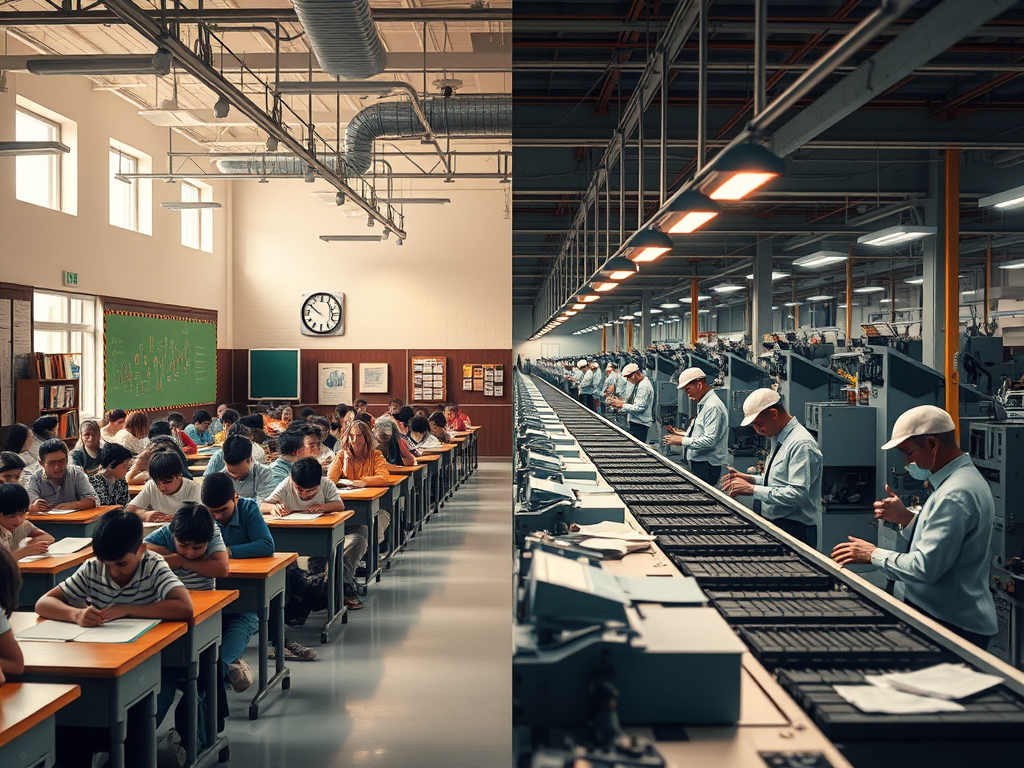
For decades, the “factory model” of education has been a topic of debate. Recent shifts in federal policy have made this discussion a bureaucratic reality. This shift has created a school-to-work pipeline. The U.S. government is changing its approach to schooling. Many people are asking if schools are becoming training grounds for the economy rather than centers for learning.
1. The School-to-Work Pipeline and the Great Bureaucratic Shuffle
Recent reports indicate a massive reorganization within the federal government. Despite receiving full funding from Congress, the Department of Education has begun reassigning employees to other agencies. This movement suggests a fundamental change in how the department operates. It signals a pivot away from traditional academic oversight toward a more decentralized, inter-agency approach.
2. A New Partnership: Education Meets the Workforce
The Department of Education recently announced six new agency partnerships designed to “break federal bureaucracy.” Critics and observers note that these partnerships are framed as a move toward efficiency. They particularly point out that those involving the Department of Labor align classroom curriculum with job market needs. These collaborations ensure educational relevance and workforce readiness.
This is further shown by a joint “Memorandum of Agreement” (MOU) between the two departments. It aims to expand registered apprenticeships and “career-connected learning” for students as young as middle school.
3. Moving K-12 into the School-to-Work Pipeline
One of the most controversial shifts involves moving key K-12 educational programming directly under the Department of Labor’s jurisdiction.
- The Intent: Proponents argue this makes education more “practical” and ensures students graduate with marketable skills.
- The Concern: Educational think tanks, such as the Fordham Institute, argue that this move is neither “smart nor conservative.” They warn that treating children primarily as future “labor inputs” ignores the broader purpose of education. Education should raise informed, well-rounded citizens, not just efficient employees.
4. Navigating the School-to-Work Pipeline: Parents Opting Out
The TikTok creator BigNisEnergy8888 argues that this “pipeline” is exactly why parents should reconsider traditional schooling. The argument is that when the Department of Labor influences the Department of Education, the “hidden curriculum” becomes clear:
- Bells and Schedules: Mimic factory shifts.
- Standardized Testing: Mimic quality control in manufacturing.
- Compliance over Creativity: Prioritizes following instructions over independent problem-solving.
Tips for Parents
As the school-to-work pipeline becomes the new standard for public education, families face a decision. They must decide how much “labor-market alignment” they want for their children. If you are concerned about the shift from wisdom-based learning to workforce training, here are several paths to consider:
- Audit the Curriculum: Ask your school board for the “Memorandum of Understanding” between the district and local workforce boards. Check if your child’s “career-connected learning” is replacing core humanities or arts credits.
- Explore “Slow Education”: If the “factory model” feels too fast, consider other approaches. Look into Waldorf or Montessori methods. These methods prioritize developmental milestones over economic productivity.
- Supplement at Home: Counterbalance the “human resource” approach by emphasizing philosophy, logic, and creative arts at home. These are subjects that the Department of Labor rarely prioritizes.
- Consider Alternative Paths: For many, the ultimate response to the school-to-work pipeline is opting out entirely. They choose homeschooling or “unschooling” (rejecting traditional schooling, curriculum, and fixed schedules). In this approach, the child’s interests, not the market’s needs, dictate the pace.
Next Steps for Families
- Attend the Next Board Meeting: Specifically ask how much federal “Labor” funding your district receives and what strings are attached. FIRST OF ALL, JUST GO TO THE SCHOOL BOARD MEETING.
- Evaluate Your Child’s Schedule: Is their time spent on “compliance and testing” or “curiosity and problem-solving”?
- Join the Conversation: Connect with local parental rights groups. Stay informed on how these federal agency mergers affect your local classroom.
The Conclusion: Workforce or Wisdom?
The legal and administrative changes currently taking place include moving staff, forming labor partnerships, and shifting K-12 oversight. These changes confirm that the bridge between school and the workplace is shorter than ever.
For some, this is a necessary modernization to help students find jobs. For others, it is the final confirmation that the public school system views children as “human resources” for the state. As these two departments continue to merge their missions, the choice for parents becomes a fundamental one. Do you want an education that prepares your child for a job? Or do you want one that prepares them for life?
Sources & Further Reading:
- Federal News Network: Reassigning Education Dept Employees
- U.S. Dept of Labor: Strengthening Career-Connected Learning
- U.S. Dept of Education: Breaking Federal Bureaucracy through Partnerships
- Fordham Institute: The Risks of Moving K-12 to Labor
- Franczek P.C.: Trump Administration Agency Shifts
Discover more from The Whitsdom Press
Subscribe to get the latest posts sent to your email.
Leave a comment