
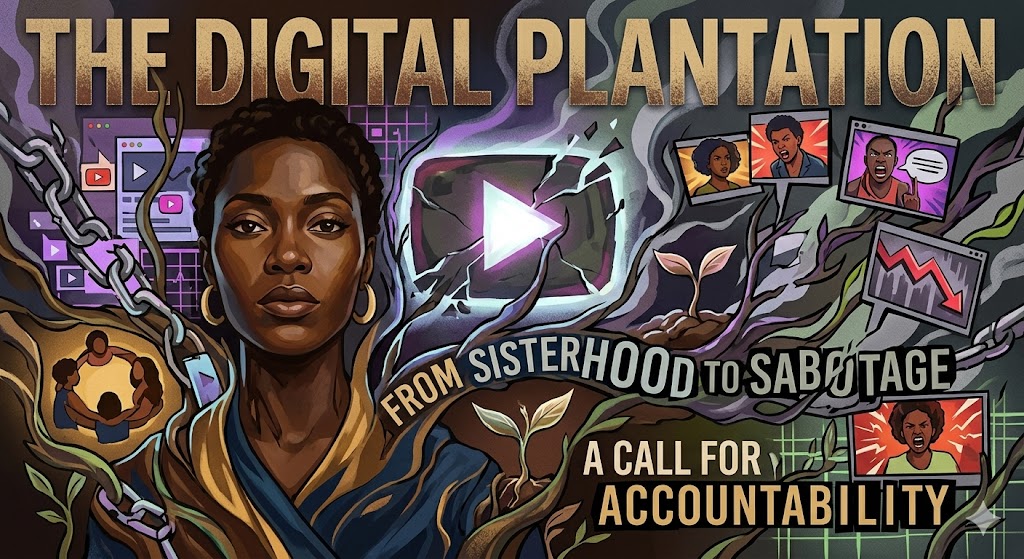
Let’s keep it 100, no chaser. YouTube gave us a microphone, but it has also birthed a digital plantation where toxicity often replaces community. While we built incredible spaces, we must now face the self-inflicted darkness within our digital backyards.
While we rightfully call out injustice everywhere else, we often turn a blind eye to the venom. We hurl this venom at each other in our own digital backyards. It’s heartbreaking. It’s toxic. And it has to stop.
From Sisterhood to Sabotage on the Digital Plantation
As Black women, I see our creativity, humor, and sheer dominance on this platform every day. But the flip side is a corrosive toxicity that twists celebration into jealousy and community into a battlefield.
The triggers are almost always the same. It could be a disagreement over a man. Sometimes it’s jealousy about who’s the “number one” content creator in a niche. Other times, it’s simply the inability to handle another sister’s shine. Instead of using our platforms to uplift, we drag each other down for views, clicks, and super chats. We’ve gone from healthy competition to a crab-in-a-barrel mentality, digitized and on steroids.
The New Age of Bullying: When “Drama” Becomes Dangerous
This isn’t the messy comment sections of years past. Cyberbullying in our community has evolved into a coordinated, malicious campaign with real-world consequences.
We’ve weaponized the internet’s darkest tools, and we’re aiming them squarely at each other:
- The Art of Doxxing: You disagree with somebody? Suddenly, her home address and private phone number are “exposed.” This isn’t winning an argument; it’s putting her physical safety at risk. It is a tactic often used online. People use it when they feel they are being picked on too much.
- Weaponizing the System: The go-to move is no longer to create better content. It’s to make false reports to the FBI, police, or CPS. You’re not just trying to get her demonetized. You’re using systems steeped in bias against a fellow Black woman. This can potentially threaten her life. It can also endanger her children and her freedom.
- Digital Blackface with AI: The latest low? Using artificial intelligence to create images to taunt or make fun of someone or deepfake compromising images. This is the modern-day digital lynching, stripping a sister of her dignity because you can’t stand her success…or HER period.
- Wishing Ill on Innocents: The comments have moved beyond “I hope you fail.” They have escalated to “I hope your kids get ____.” We are speaking curses onto each other’s children. When did we become f**ked up women?
This isn’t “YouTube streets.” This is destructive, dangerous behavior that causes real mental health struggles and can spill over into real-life violence.
Why Are We Doing the Oppressor’s Work For Him?
We know the world doesn’t love us. We fight systemic racism, bigotry, and misogyny every single day. So why are we so eager to do their work for them?
There’s a deeper issue here. Many of us grew up in environments where women were pitted against each other. The idea that another Black woman’s success means there’s less for you—is a lie we’ve internalized and digitized. Instead of breaking the cycle, we teach other Black women that hate and sabotage are the price of success. These women are aspiring or rising content creators.
Reclaiming Our Space: Beyond the Digital Plantation
This isn’t about being perfect or never disagreeing. It’s about realizing that we don’t have to destroy each other to create content. We can disagree, debate, and critique without threatening lives and livelihoods.
It’s time to hold up a mirror and ask ourselves, as creators and consumers:
- Am I building my platform on positivity, authenticity, and REAL CONTENT—or on bullying and tearing down other women?
- Am I teaching the younger ones and aspiring creators to stand tall or to stoop low for views?
- Am I adding value to the culture, or am I contributing to its destruction?
Every time we attack each other, we hand power back to the very systems that silence us. While we’re busy calling the FBI, brands and real opportunities pass us by. We also waste time contacting Children’s Protective Services (CPS) on each other. The algorithm may thrive on negativity, but it comes at the cost of our collective soul.
Our Path to Healing: Choosing Community Over Clicks
We are powerful, resilient, and brilliant. Our ancestors dreamed of a day we could have our own platforms and our own economy. We are living that dream, but we’re using it to play a toxic, high-stakes game.
Let’s commit to doing better, starting today:
- Check Your Motives: Before you post, ask: “Am I building up, or am I tearing down?”
- Withhold Your Click: Stop feeding the beast. Don’t engage with these channels dedicated to destruction. Starve them of the currency they crave.
- Practice Radical Support: Actively support the Black women creators you love. Share their content. Defend them respectfully. Create a counter-culture of love.
- Following the Crowd: Stop sitting in livestreams and chats that treat the digital plantation as entertainment. They do this by dragging other Black women or Black men. When you participate in these spaces, you are funding the very toxicity we are trying to escape.
There are so many urgent issues affecting our community, yet we are so busy online attacking each other. It is exhausting. We as Black women must choose to be kinder to one another on these social media platforms. It’s perfectly okay to disagree. However, channeling that anger into getting people fired from their jobs is evil and needlessly cruel. Getting them doxxed or having their children taken by CPS is also evil. This behavior needs to be dismantled because it serves no one.
Log off and be mothers. Log off and live the lives you claim to have. If these social media platforms disappeared tomorrow, what would you truly have left? Choose community over clicks.
Discover more from The Whitsdom Press
Subscribe to get the latest posts sent to your email.
One comment