
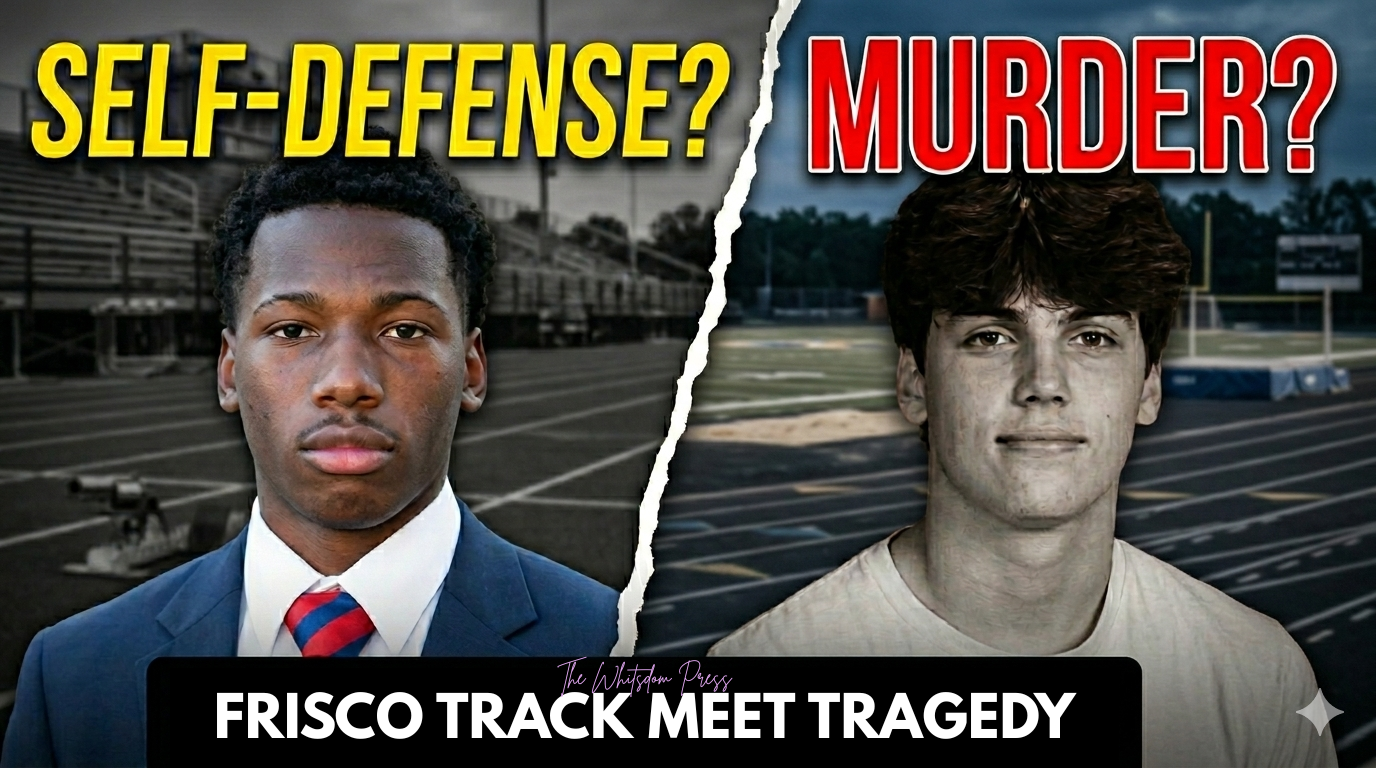
The highly anticipated murder trial of Karmelo Anthony officially got underway on the second floor of the Collin County Courthouse in McKinney, Texas. Anthony, a Centennial High School student-athlete, stands accused of the April 2, 2025, fatal stabbing of 17-year-old Memorial High School student Austin Metcalf during a track meet at David Kuykendall Stadium.
With a strict gag order in place and a tech-free policy enforced inside Judge John Roach Jr.’s courtroom, independent journalists and content creators provided the essential raw, unfiltered notes to reconstruct the explosive first days of testimony. What emerged is a complex, high-stakes legal battle over intent, provocation, and self-defense.
Setting the Scene: Two Families, One Courtroom
The visual and emotional contrast inside the courtroom on Friday, June 5, 2026, was stark.
- The Anthony Family: Karmelo’s family—including his mother (a nurse), father (a dealership finance manager), aunts, uncles, and cousins—arrived looking incredibly sharp and professional. Despite the heavy gravity of the situation, they maintained a dignified, hopeful composure.
- The Metcalf Family: On the opposing side sat the family of the victim, Austin Metcalf. They entered the courtroom understandably solemn and quiet, carrying the immense grief of a family heading into their son’s murder trial.
When the defendant, Karmelo Anthony, was escorted into the courtroom at 8:48 AM, the change in his appearance was immediate. The long hair from his widely circulated September 2025 mugshot was gone, replaced by a neat regular fade. He was dressed sharply in a blue tuxedo, standing to enter a plea of not guilty.
Demystifying the Jury
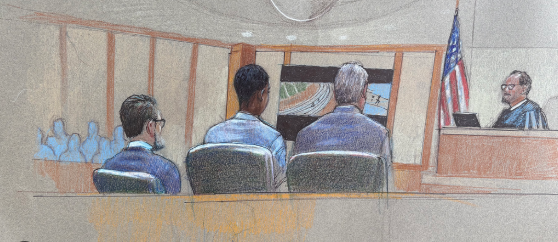
Social media and major news networks have spun immense speculation regarding the makeup of the jury. To set the record straight: this is not an all-white jury, but it contains no Black jurors.
The 12-person panel consists of a diverse, notably younger mix of individuals, including Indian, Chinese, Caucasian, and Hispanic jurors. According to local activist Dominique Alexander, the absence of African-American individuals on the jury was the result of the standard legal “strikes” process during voir dire, where both legal teams dismissed prospective jurors whose answers did not align with their strategic preferences.
Opening Statements: Provocation vs. Self-Defense
The court allotted strictly timed, 20-minute opening statements to each side, establishing two completely diametric narratives.
The Prosecution’s Case: A Senseless Baiting
Led by prosecutors Bill Wirskye and Dewey Mitchell, the state presented the stabbing as a “senseless, provoked, and unjustified murder” that had nothing to do with race or true self-defense. The state argued that Anthony intentionally brought a concealed pocketknife to a junior varsity track meet and deliberately baited Metcalf.
According to Wirskye, when rain prompted students to take cover, Anthony made a beeline for the yellow Memorial High School canopy tent—an area teams treat like a locker room to protect valuables from theft. The state claims that when multiple people told Anthony to leave, he refused, goading Metcalf into making physical contact by warning the teenagers to watch what would happen if they touched him. The state argues that once Metcalf “took the bait” and put his hands on him, Anthony launched a surprise attack, plunging the knife directly into Metcalf’s heart.
The Defense’s Case: 80 Pounds Heavier and Outnumbered
Defense attorneys Toby Shook and Mike Howard countered by asking the jury to look past legacy media narratives. Shook, a prominent criminal defense attorney known for handling high-profile cases (including representing Amber Guyger), joins Howard in painting a very different portrait of Anthony: a 19-year-old standout student (3.7 GPA), chess team member, and football captain with zero criminal history.
The defense noted that Anthony was dealing with an epilepsy diagnosis and an arm injury that required physical therapy. He had actually canceled a therapy appointment that morning just to support his team at the meet. Because Centennial High School had no covered tent—only a tarp—Anthony sought shelter from the torrential rain. He entered the Memorial canopy because he recognized Edwin Park, a close family friend of Anthony’s girlfriend, walking up to “dap him up” and sit down cordially.
The defense highlighted a stark physical disparity: Anthony stood at roughly 5’8″ and 130–135 pounds, while Austin Metcalf and his twin brother, Hunter, were roughly 6’1″ and between 213–215 pounds. Outweighed by more than 80 pounds and surrounded by roughly 20 Memorial students, Anthony was allegedly confronted by the twins, who told him, “You got to go.” When Anthony remained seated, Metcalf allegedly made the first physical contact by grabbing, shoving, and punching him. The defense argued that Anthony had to make a split-second decision in a moment of extreme fear and chaos, noting that he did not strike twice, did not target anyone else, and immediately dropped the weapon.
Witness Testimony & Evidence Breakdown
Witness 1: Paramedic Neil Adams Recreates the Gritty Scene
The state’s first witness was Neil Adams, a four-year veteran paramedic with the Frisco Fire Department. Adams testified to the chaotic environment of April 2nd, recounting when his station received the emergency “tone out” for a stadium stabbing.
- The Environment: Adams noted that the weather shifted from a light drizzle when they left the station to a heavy, torrential downpour by the time the ambulance drove directly onto the stadium turf.
- The Medical Effort: Jumping a chain-link fence to assist Engine 1, Adams found five medical personnel desperately working on Metcalf near the north shoulder of the field. Metcalf’s pupils were already fixed and dilated, he lacked a pulse, and his skin had turned gray.
- Life-Saving Measures: Paramedics utilized a “Lucas” device (an automated CPR machine) to continuously pump blood and oxygen. Despite opening up the chest cavity via the rib cage to clear pooled blood, administering a milligram of Epinephrine, and delivering two units of blood in the ambulance, Metcalf flatlined.
The emotional toll of the testimony was evident as Paramedic Adams grew visibly flushed and choked up on the stand. The defense chose not to cross-examine Adams, and the state moved to its next witness.
Witness 2: Officer Cortez and the Apprehension
The state then called Officer Cortez, a 45-year-old Frisco Police Department officer on the force since 2022. Cortez testified that he knew of the Metcalf brothers as local high school athletes but had never had a negative encounter with them.
Cortez recounted hearing the stabbing dispatch over his radio and rushing to the stadium entrance, where two frantic students pointed him toward the bleachers. Contrary to early rumors that the suspect fled the stadium, Cortez testified that Karmelo Anthony did not run away.
Cortez spotted Anthony inside the stadium fence, walking straight toward a coach for an embrace before putting his hands in the air to surrender. Because Cortez was on the opposite side of the fence, he ordered Anthony to walk toward him with his hands raised. Anthony complied entirely and was described as “very cooperative” during the arrest.
The Emotional Confession and Bodycam Footage
The prosecution played the highly anticipated 911 audio and Officer Cortez’s bodycam footage, which caused the Metcalf family to grow visibly distraught in the gallery.
In the audio, Cortez can be heard notifying dispatch that he has the “alleged suspect” detained. The courtroom listened intently to Anthony’s immediate, tearful reaction recorded on the bodycam:
“I’m not alleged. I did it. He put his hands on me. I told him not to.”
Anthony was described as “bawling” and crying uncontrollably in the footage, repeatedly weeping to officers that Metcalf had put his hands on him first.
To counter this emotional state, the prosecution had Officer Cortez state that Anthony eventually became “cool, calm, and collected” in the back of the police cruiser, implying the initial tears may have been performative. However, records show Anthony caused no disruptions during transport and even asked Officer Richie (the female transport officer) if Metcalf was going to be okay.
Video Analysis & Student Eyewitness Testimony
A pivotal turn in the trial occurred as forensic video analyst Mark Porter walked the jury through five different stadium surveillance angles (Exhibits 5 through 9). While the original footage was captured by a distant stadium camera—making it blurry when zoomed in—Porter brought in a specialized monitor to parse the frames.
The raw footage and subsequent student testimonies immediately dismantled initial media claims that Metcalf “had no business” being in that area, or that Anthony engaged in a random ambush. Instead, it established a precise, rapid timeline:
- 9:52:45 AM: Anthony appears near the bleachers wearing a light gray hoodie and blue sweatpants. He looks around, briefly walks back down, and reemerges.
- 9:53:06 AM: Austin Metcalf and his twin brother, Hunter, are captured entering the stadium from the parking lot alongside three other boys.
- 9:54:00 AM: The Metcalf brothers enter the yellow Memorial canopy tent.
- 9:56:14 AM: Anthony enters the top of the Memorial tent, roughly two minutes after the twins arrived.
- 9:56 AM – 10:00 AM: Surveillance captures routine stadium activity. Students are seen walking past the canopies in full rain ponchos and holding umbrellas. There are no signs of a crowd congregating or an early disturbance.
- 10:00:00 AM: The physical altercation breaks out. The entire encounter from Anthony’s entry to the stabbing lasted a total of 4 minutes and 12 seconds.
- The Aftermath: Immediately following the injury, the kids scatter “like Skittles.” Anthony is seen running from the top of the tent, scrambling and stumping down the bleachers as kids chase him. Instead of heading for an exit, he runs onto the track field and walks directly up to Heritage High School coach Vincent Hooper.
- The Total Time: From the exact moment Austin Metcalf walked into the stadium from the parking lot to the moment Anthony was placed in handcuffs, a total of only 15 minutes and 20 seconds had elapsed.
Complex Realities and Witness Discrepancies Exposed
As the defense parsed the surveillance video and cross-examined the teenage track athletes who were crammed under the canopy, several critical facts emerged that disrupted the state’s narrative:
- The Key Testimony of Edwin “Eddie” Park: Eddie, the Centennial student and close friend of Anthony’s girlfriend, testified that when Anthony first arrived, the interaction was completely peaceful. He confirmed they “dapped each other up” and sat down out of the rain to chat. The atmosphere only shifted when the Metcalf twins approached.
- The Canopy Setup: While the prosecution argued the tent was a secure perimeter to protect student belongings from theft, observers noted it was a standard, open-air canopy full of people. Furthermore, the first canopy Anthony walked past was completely jam-packed with huddled students trying to escape the downpour, explaining why he proceeded to the second, more open Memorial canopy to find a spot to sit.
- The Core Group and Unauthorized Presence: The footage tracks a group of seven or eight students walking from the school direction, leaving a core group of four specific individuals who walked up directly in front of a seated Anthony and stayed entrenched in that spot. Austin Metcalf was confirmed to be among those front four. Shockingly, coach testimonies revealed that Austin Metcalf had actually been kicked off the sports team prior to the meet. His twin brother, Hunter, was currently enrolled in an alternative school program. Under official district policy, alternative school students are strictly barred from being on school property or attending athletic events.
- The Distraction and the “Tag In”: The defense highlighted a segment of the video showing what they allege was an intentional distraction attempt. A student is seen moving a specific way to divert attention, creating a brief window just before the situation escalated and Austin “tagged in” directly in front of Anthony to confront him.
- Conflicting Verbal Accounts: The teenagers under the tent gave conflicting accounts of the verbal sparring that followed. Some Memorial students testified that Anthony took an aggressive tone, warning, “Touch me and find out,” which the state points to as proof of provocation. However, other students—including Eddie—recalled Anthony attempting to establish a peaceful defensive boundary, stating, “As long as you don’t touch me, we are cool.”
- The Backpack Gesture: Eddie noted that during the argument, Anthony reached his hand toward his bag. While most of the 20 Memorial students viewed this as a sign to back off and took a step away, the Metcalf brothers stayed entrenched. Despite the warning gesture, Austin Metcalf made the first physical contact by lunging forward, grabbing, and shoving Anthony while he was still seated.
Legal Strategies and Physical Evidence
As the trial transitions into its next phase, the defense team is aggressively poking holes in the state’s theory of a premeditated, concealed attack.
During cross-examination, Officer Cortez admitted that Anthony did not possess a knife or a backpack on his person at the time of his arrest. The prosecution introduced the weapon separately: a pocketknife featuring a 3.5-inch black folding blade and a textured silver handle, which had been left in Anthony’s backpack near the bleachers. The defense strongly emphasized to the jury that this pocketknife is small enough to fit completely inside a closed palm and is of a legal size to carry under Texas state law—directly challenging the prosecution’s framing of an illicit, calculated murder weapon.
Furthermore, the defense introduced courtroom exhibit photos 69 and 73, which clearly display a visible cut on Karmelo Anthony’s left middle finger—a key piece of physical forensic evidence the defense intends to use to prove Anthony was defending himself from a physical assault.
Courtyard Clash: Tensions Ignite Outside the Courthouse
While strict legal decorum remains intact inside the courtroom, the volatile atmosphere directly outside the Collin County Courthouse mirrors the deep divisions surrounding the case.
The perimeter of the courthouse grounds has become a staging ground for opposing demonstrations. On one side, a passionate contingent of demonstrators gathered in defense of Anthony, carrying signs and advocating for the young man’s acquittal under Texas self-defense statutes.
On the opposite end of the lawn, the demonstration took a tense, racially charged turn. Eyewitnesses and independent journalists on the scene reported an active presence of individuals carrying Confederate flags who appeared to be utilizing intimidation tactics—”mad-dogging” minority trial attendees, filming onlookers on body cameras, and attempting to escalate racial friction.
A heavy, visible presence of regional media trucks and Collin County Sheriff’s deputies has kept a strict barrier between the factions, keeping the main courthouse steps clear. Inside, the defense is preparing to dissect the official training protocols of the arresting officers as the state prepares to bring a series of teenage eyewitnesses to the stand.
The trial is expected to last roughly two weeks.
Stay tuned for updates!!!
Discover more from The Whitsdom Press
Subscribe to get the latest posts sent to your email.
Leave a comment