
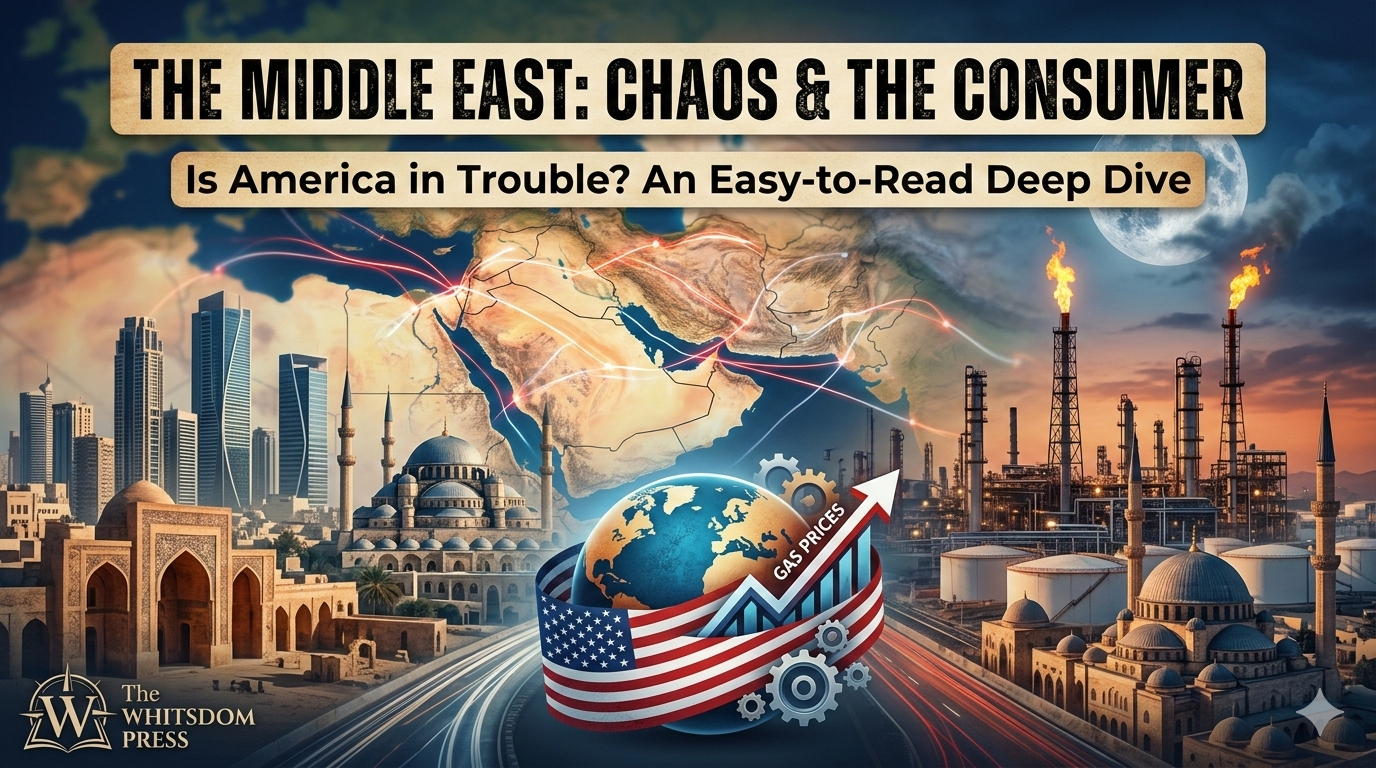
If you’ve been scrolling through social media lately, you’ve noticed something. Gas prices are rising. This increase is due to the 2026 Middle East crisis.
To understand why this is happening, we have to look past the military jargon and see the bigger picture. Here is a breakdown of what’s going on, who is involved, and why your gas bill is suddenly creeping up.
The Spark: What’s Happening Right Now?
The current tension reached a boiling point on February 28, 2026, following a massive U.S. and Israeli operation named Operation Epic Fury. For decades, Iran and the U.S. have been in a “shadow war.” That war just turned into a direct conflict. With the death of Iran’s Supreme Leader, Ali Khamenei, in the opening strikes, and Iran’s subsequent missile retaliation against U.S. bases in the Gulf, the region has entered its most volatile state in recent history.
The Why: It’s Not Just One Thing
Why now? It’s a combination of three major factors:
- Nuclear Tension: Iran was reportedly on the verge of developing nuclear weapons after diplomatic talks failed in early February.
- The “Head of the Snake” Strategy: The U.S. and Israel shifted away from fighting small rebel groups to targeting the source of their funding: the Iranian leadership.
- Internal Pressure: Iran was already facing a “Winter Uprising” at home due to a collapsing economy. Military leaders calculated that the regime was weak enough for a decisive blow to bring about total change.
Is America in Trouble?
“Trouble” is a heavy word. While the U.S. remains the most powerful military force in the region, the risks are real. This isn’t just about soldiers on a battlefield; it’s about asymmetric warfare. That is when we start seeing cyber-attacks on banks and disruptions to global travel. Furthermore, hundreds of U.S. service members remain in danger. Iran targets bases in neighboring countries like Kuwait and the UAE.
The Cost of Conflict: The American Consumer
This is where the Middle East conflict hits home. You don’t have to follow politics to feel the impact. The Middle East is the world’s “gas station,” and when the pumps are threatened, prices skyrocket.
Iran has moved to block the Strait of Hormuz. It is a waterway where 20% of the world’s oil flows. As a result, the global supply has tightened. In just the last week, national gas prices jumped by nearly 50 cents per gallon. If the conflict continues, experts warn that prices could climb to $4.00 or higher, which would eventually make everything from groceries to Amazon deliveries more expensive.
📍 The Whitsdom Quick Guide: The 2026 Crisis at a Glance
| Question | The Simple Answer |
| What started this? | A joint U.S.-Israeli strike on Feb 28 to stop Iran’s nuclear program and remove its leadership. |
| Who is winning? | The U.S. has “decapitated” Iran’s leadership, but Iran is retaliating with heavy drone and missile strikes. |
| Is the U.S. at war? | Yes, it is currently a direct aerial and naval war, though no large-scale ground invasion has started. |
| Why is gas expensive? | Iran is disrupting the Strait of Hormuz, the world’s most important oil shipping route. |
| What should I watch for? | Cyber-attacks on U.S. infrastructure and further jumps in the price of gas and groceries. |
The Bottom Line: At The Whitsdom Press, we believe knowledge meets wisdom. Understanding these global shifts isn’t just about being “political”—it’s about being prepared. As the dust settles on these strikes, the map of the Middle East is being redrawn in real-time.
Discover more from The Whitsdom Press
Subscribe to get the latest posts sent to your email.
Leave a comment