
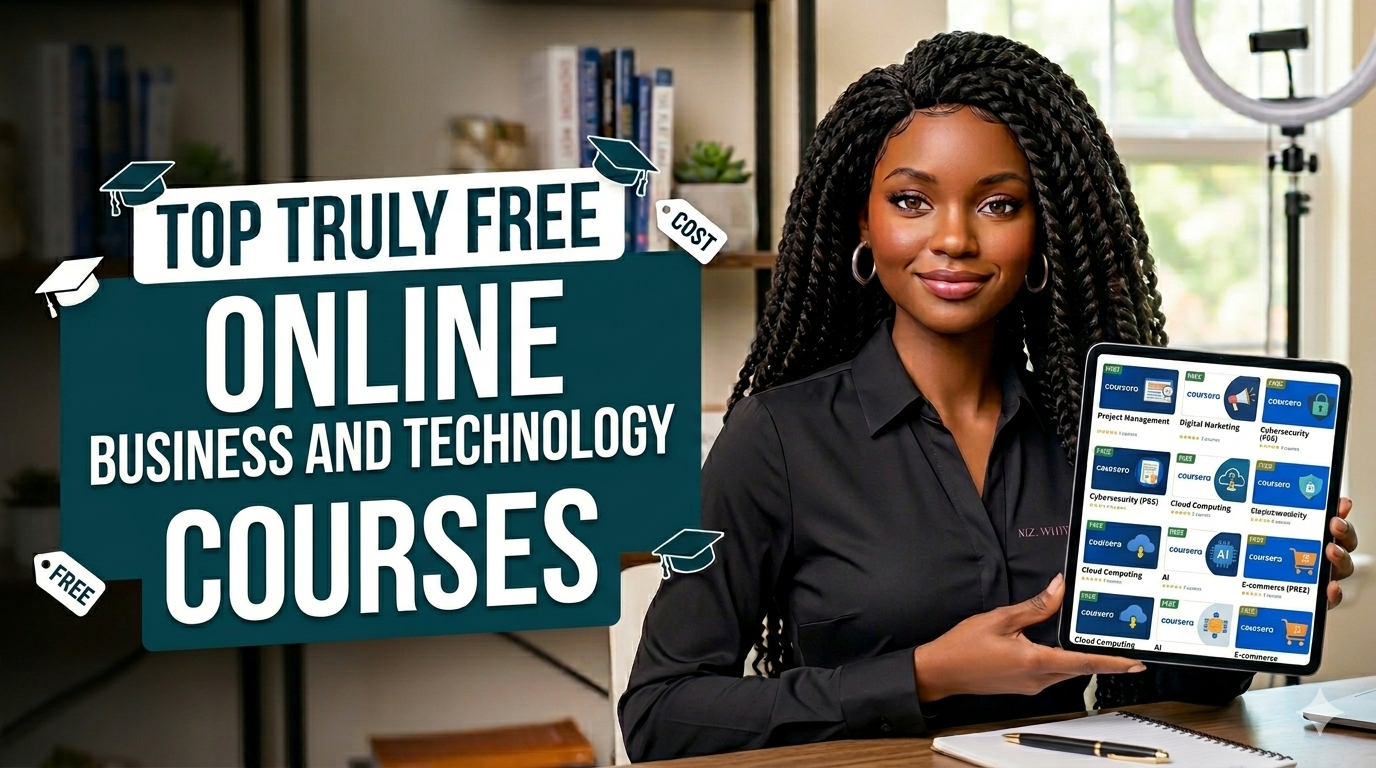
For many, the dream of going back to school or pivoting to a new career is popular. However, the price tag of higher education often dampens this dream. If you are at the edge of a career change, Coursera offers a solution. You can “test the waters” without drowning in tuition. You also avoid committing to a recurring subscription. Coursera’s catalog of truly free content is your ideal starting point. No, this is not an affiliate promotion; I’m not getting paid for this.
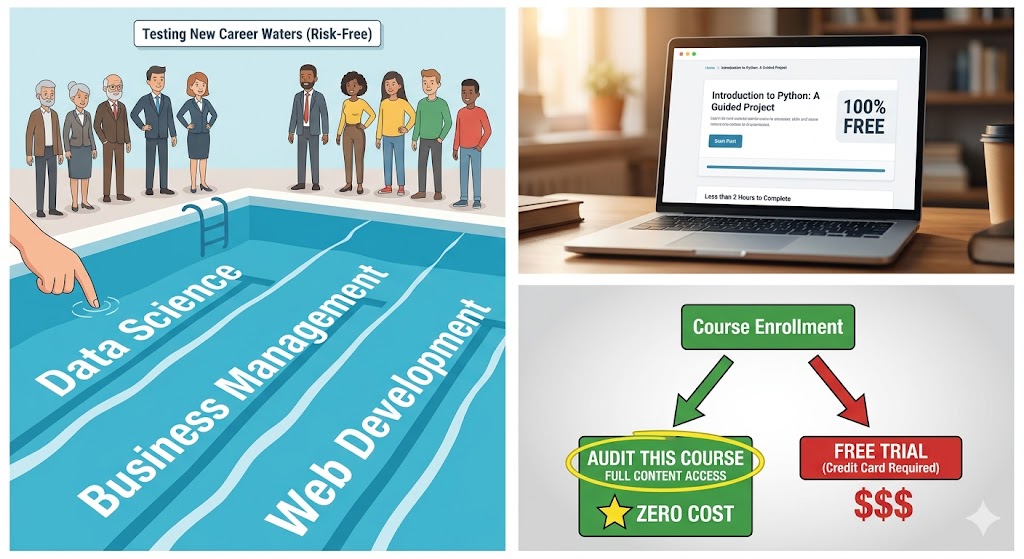
Many platforms advertise “Free Trials” that automatically roll into monthly charges after seven days. However, Coursera offers a distinct category of 100% Free courses and projects. These are perfect for curious learners. A few months ago, I completed the Fundamentals of Machine Learning and Artificial Intelligence through Amazon Web Services and the Social Media Marketing course through Meta. Overall, these courses provide a “free swim in the pool” before they decide if they truly want to pursue a new industry.
Free Tech and Business Courses
| Course Name | Offered By | Best For | Focus Skills |
| Business Analysis & Process Management | Coursera | New Career Change Analyze business processes and find solutions to existing business problems. Define your business processes, their objectives, and how they flow within the organizational context | Process Mapping, Business Analysis, Process Analysis, Computer Literacy. Process Management |
| Introduction to Negotiation: A Strategic Playbook for Becoming a Principled and Persuasive Negotiator | Yale University | Professional Enhancement & Networking This course will help you be a better negotiator. Unlike many negotiation courses, we develop a framework for analyzing and shaping negotiations | Strategic Decision-Making, Negotiation, Conflict Management, Decision Making, Strategic Communication |
| AI For Everyone | DeepLearning.AI | Tech Literacy & Modern Trends A non-technical overview designed specifically for adults who want to understand AI terminology, realistic capabilities, and how it impacts modern society and business. | AI Literacy, AI Product Strategy, Data Ethics, Applied Machine Learning |
| Build your business brand using Canva | Digital Growth & Entrepreneurship Find out why it’s important to build a brand and learn how you can do it using Canva. | Graphic and Visual Design Software, Brand Strategy, Branding | |
| Using Basic Formulas and Functions in Microsoft Excel | Coursera | Everyday Productivity Guided practice — Create an account in Microsoft Office 365 and upload a file to open with Excel. Write formulas to perform simple calculations like addition, subtraction, multiplication and division | Microsoft Excel, Spreadsheet Software, Prompt Engineering, Microsoft Copilot |
| Getting Started with Microsoft Word | Coursera | Core Skill Building & Document Creation Great refresher for professional correspondence, writing projects, resume building, or volunteer work. | Microsoft Word, Document Management, Productivity Software, Business Writing |
| Introduction to Finance: The Basics | University of Illinois Urbana-Champaign | Financial Knowledge Build a financial knowledge base by understanding essential topics in modern finance. | Cash Flows, Financial Analysis, Resource Allocation, Corporate Finance |
| Google Ads for Beginners | Coursera | Digital Growth & Entrepreneurship Create a Google Ads account and set up your first campaign structure. Create ad groups, do keyword research, set up audience targeting, and write ads | Keyword Research, Return On Investment, Paid media, Advertising |
How to Successfully Navigate and Pace Your Classes
Deciding to start is easy; finishing is where the challenge lies. To move through online classes effectively and reach the finish line, follow these pacing strategies:
1. Treat “Guided Projects” as Sprints
Coursera offers many Guided Projects that take less than 2 hours to complete. If you are nervous about committing to a 3-month course, start with these. They provide immediate satisfaction and a tangible skill, building the confidence you need for longer academic journeys.
2. Master Your Daily Pacing
- Set a “Micro-Goal”: Instead of saying “I’ll study for 3 hours on Saturday,” commit to 20 minutes a day. Online learning is designed for modular consumption.
- Front-Load the Content: The hardest part of any online course is the second week when the initial excitement fades. Dedicate extra time during your first few days to get ahead of the syllabus.
- Use the 1.25x Speed: If you find a lecture moving too slowly, don’t stop watching. Increase the playback speed to 1.25x or 1.5x. It keeps your brain engaged and helps you move through material you already partially understand.
3. Create a “Dedicated Workspace”
Even though the course is free, your time is not. Treat your online class like a real classroom. Turn off phone notifications and clear a specific spot on your desk. Create a physical space associated with your “back to school” journey. This makes it much harder to quit when things get difficult. Even if you work out your car, your car can be the classroom. Libraries are always available.
By leveraging these truly free resources, you can explore the nuances of a new career path without the financial risk. Whether it’s coding, finance, or creative design, the pool is open—jump in.
What specific career path or industry are you most curious about testing out first?
Discover more from The Whitsdom Press
Subscribe to get the latest posts sent to your email.
Leave a comment