
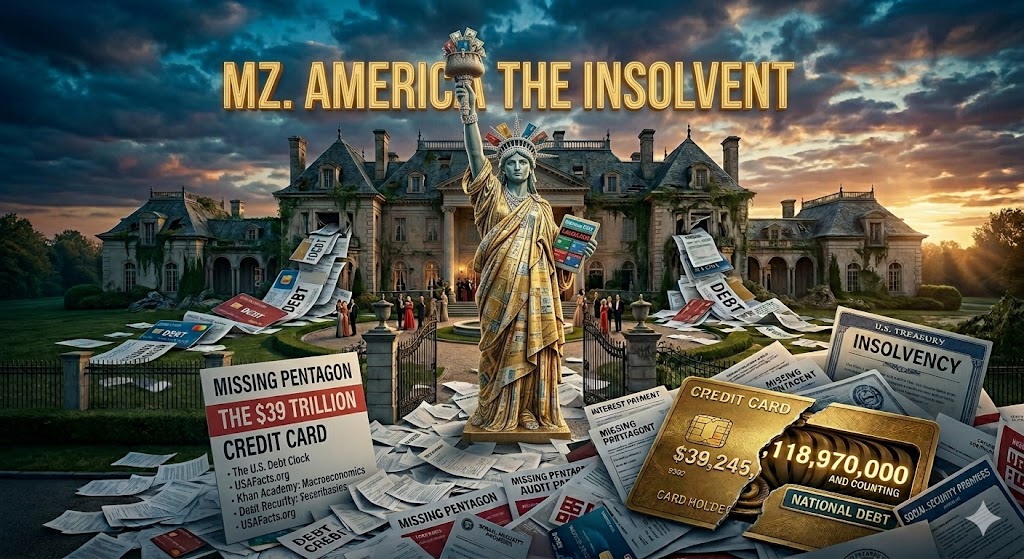
Imagine if Mz. America is living in a massive mansion. She has the best security system, the newest cars, and she throws the biggest parties. If you looked at her bank statement, you’d see her expenses far exceeds her income each month.
Is Mz. America “broke”? Not exactly—she still owns the house and has jobs. She is leaning very heavily on her credit cards. The interest is starting to cost more than their groceries.
Here is a simple breakdown of what is happening with America’s money in 2026.
1. The $39 Trillion Credit Card
Right now, the U.S. national debt is over $39 trillion. That number is so big it’s hard to wrap your head around.
- The Problem: We keep borrowing money to pay for things like roads, schools, and the military. This is because we don’t collect enough in taxes to cover these expenses.
- The Interest: Just like a credit card, you have to pay “interest” on what you borrow. In 2026, the U.S. is spending over $1 trillion a year just on interest. That’s money that doesn’t buy us anything new; it’s just the fee for being in debt.
2. The “Missing” Pentagon Money
You might hear people say the military “lost” trillions of dollars. It’s not that the money vanished into thin air; it’s more like a messy closet.
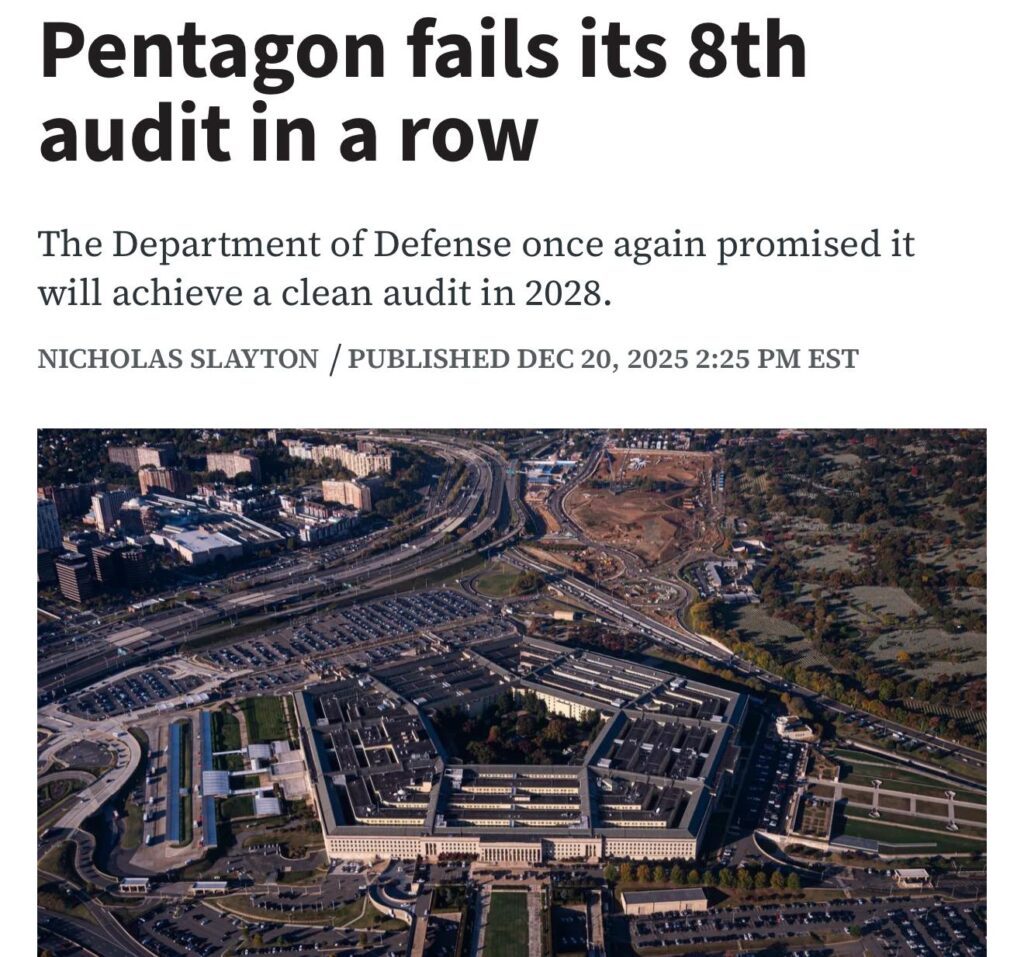
The Pentagon (the headquarters for the U.S. military) has failed its last eight financial “check-ups” (audits). They own trillions of dollars worth of tanks, planes, and buildings. Their paperwork is so poor that they can’t tell auditors exactly where everything is. They also can’t figure out what it’s worth. Imagine having a giant warehouse full of stuff but no list of what’s inside—that’s the current situation.
3. The High Cost of War
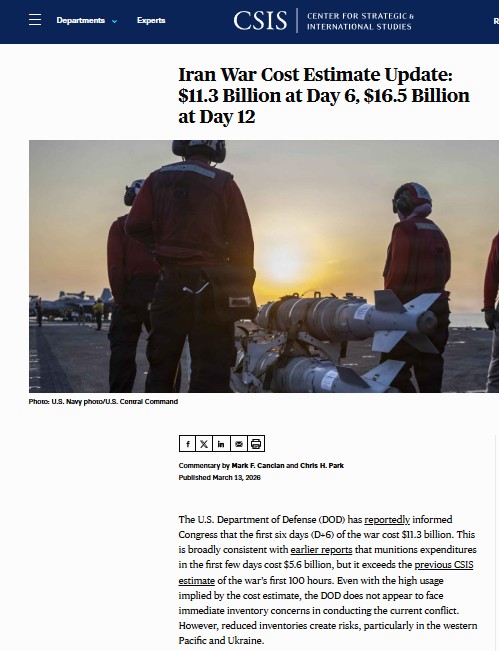
War is incredibly expensive. Since 2001, the U.S. has spent roughly $8 trillion on conflicts.
- The Catch: We didn’t have that money sitting in a savings account. We borrowed almost all of it.
- The Result: Even when the fighting stops, we continue to pay off the “bill” for those wars. We are still paying decades later through interest payments.
4. Is the U.S. “Insolvent”?
There are rumors that the Treasury (the government’s “bank”) says we are “insolvent.”
- What that means: In the business world, you are insolvent if you owe more than you are worth.
- The Reality: If you add up everything the U.S. owns (land, gold, buildings), it’s worth about $6 trillion. But if you add up everything we owe (debt and future promises for Social Security), it’s over $130 trillion.
Technically, we owe way more than we own. Yet, the U.S. has a “superpower” that regular people don’t: It can print its own money. As long as the world still wants to use the U.S. Dollar, the government can keep the lights on.
Where to Learn More (For Free!)
If you want to understand how the world’s “money gears” actually turn without getting a headache, check out these resources:
Websites & Tools:
- The U.S. Debt Clock: A real-time (and slightly terrifying) look at how fast the debt is growing.
- USAFacts.org: A non-partisan site that breaks down government spending like a simple receipt.
Free Classes & Education:
- Khan Academy: Macroeconomics: The gold standard for beginners. It uses simple videos to explain inflation, debt, and taxes.
- Marginal Revolution University (MRU): Highly engaging, free courses that explain “Everyday Economics” using real-world examples.
- Coursera: Financial Markets (Yale University): You can “audit” this course for free. Learn how global finance actually works from top professors.
- Federal Reserve Education (FRED): The “Fed” offers games and toolkits to help you understand how they manage the nation’s money.
Bottom Line: The U.S. isn’t ‘out of money’ yet. However, it’s like a person who is living a luxury lifestyle on a dozen different credit cards. Eventually, you either have to make more money (taxes) or stop spending so much.
Discover more from The Whitsdom Press
Subscribe to get the latest posts sent to your email.
Leave a comment