
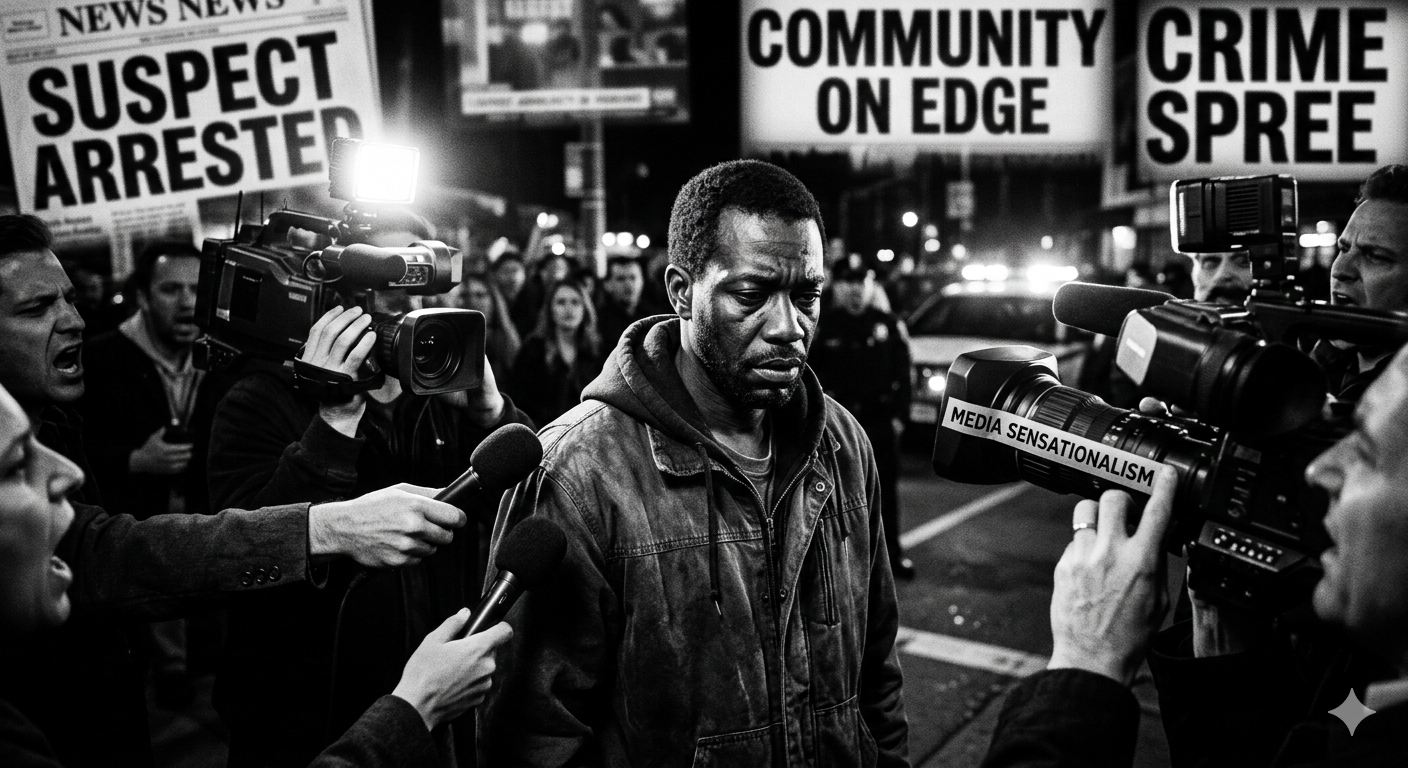
When we look back at history, we often see stories told through a lens that protects the powerful and blames the powerless. One of the most dangerous tools ever used in American history is a specific type of propaganda: The Myth of the “Bad Nigger.”
This wasn’t just a mean name or a schoolyard insult. It was a calculated, deadly tactic used by newspapers, politicians, and police to turn neighbors into monsters and justify some of the worst violence in our country’s history.
Here, we are diving deep into how this myth was created, how it fueled the 1921 Tulsa Race Massacre, and why we must recognize these patterns today.
What is the “Bad Nigger” Myth?
To understand this myth, we first have to understand the goal of white supremacy in the early 20th century. The goal was control.
In the eyes of the status quo, a “Good” Black person was someone who was submissive, worked for low wages without complaining, and stayed “in their place.” However, any Black person who was successful, educated, owned a gun for self-defense, or demanded their rights was labeled a “Bad Nigger.”
By creating this category, the media did two things:
- They made it seem like Black people were responsible for the violence committed against them.
- They gave white mobs “permission” to attack, claiming they were only cleaning up the “troublemakers.”
The Raw Truth: Tulsa, 1921
The most chilling example of this myth in action happened in Tulsa, Oklahoma. At the time, the Greenwood District (known as “Black Wall Street”) was a beacon of Black success. It had doctors, lawyers, luxury hotels, and thriving businesses.
To those who believed in the myth, a successful Black man wasn’t an inspiration—he was a threat.
The Spark and the Headline
On May 31, 1921, a young Black man named Dick Rowland was accused of assaulting a white elevator operator. While we now know this was likely a misunderstanding or a stumble, the local media saw an opportunity.
The Tulsa Tribune published a famous, inflammatory editorial titled “To Lynch a Negro Tonight.” By running this headline, the newspaper wasn’t just reporting news; it was issuing an invitation. It was telling the white community that the “Bad Nigger” had surfaced and it was their “duty” to handle it.
The Destruction of Greenwood
As thousands of white rioters descended on Greenwood, they didn’t just target the man in the elevator. They burned down 35 blocks of the wealthiest Black community in America. They used private planes to drop firebombs from the sky. They murdered hundreds of innocent people.
But here is the most important part of the myth: After the smoke cleared and the bodies were buried in unmarked graves, the official story changed.
Instead of admitting that a white mob committed mass murder, the newspapers and city officials blamed the Black community. They claimed that “Bad Niggers”—armed Black men who had come to the courthouse to prevent a lynching—were the ones who started the “riot.” By using this label, the state absolved itself of responsibility. If the victims were “bad,” then the violence against them was “justified.”
A Calculated Tactic of Dehumanization
Dehumanization is the process of stripping a person of their humanity so that it becomes “okay” to hurt them. The myth of the “Bad Nigger” was a masterclass in dehumanization.
- Step 1: Generalization. Take the actions of one person (or a fabricated story) and apply it to an entire race.
- Step 2: Criminalization. Make it seem like Black skin is naturally tied to “badness” or “aggression.”
- Step 3: Justification. Tell the public that the only way to stay safe is through “law and order,” which usually meant state-sanctioned violence.
In Tulsa, this tactic worked perfectly. The Red Cross estimated that 300 people died, yet for decades, the event was kept out of history books. Why? Because the myth had been so successful that people truly believed the Black community was to blame for its own destruction.
The Modern Connection: Media Portrayals
While we don’t see that specific slur in headlines today, the logic of the myth remains. We see it every time the media digs into a Black victim’s past to find “dirt” after they have been killed by police.
- Did they ever skip school?
- Did they have a “tough” look in their photos?
- Did they ever use a bad word on social media?
These questions are designed to revive the myth. They are used to suggest that the person was a “Bad” individual, and therefore, what happened to them wasn’t a tragedy—it was an inevitability.
Why We Must Tell the Truth
History isn’t just about dates and names; it’s about narratives. Whoever controls the story controls the truth.
For 100 years, the story of Tulsa was controlled by those who used the myth of the “Bad Nigger” to hide their crimes. By reclaiming the story of Greenwood, we aren’t just learning about a massacre; we are dismantling a lie.
We must recognize that:
- Black success is not a threat.
- Self-defense is not “aggression.”
- The media’s choice of words can be a weapon.
Black History 365 isn’t just about celebrating heroes; it’s about unmasking the villains—and often, the villain was the very language used to describe Black life.
Test Your Knowledge
To help you process what we’ve covered, try to answer these three questions:
1. What was the main purpose of the “Bad Nigger” myth in the early 20th century?
- A) To promote Black business owners.
- B) To justify violence and keep Black people under social control.
- C) To help Black and white people get along better.
2. How did the Tulsa Tribune contribute to the 1921 massacre?
- A) By printing a headline that encouraged a lynch mob.
- B) By donating money to the victims of the fire.
- C) By calling for a peaceful protest at the courthouse.
3. Why did the state blame “Bad Niggers” for the destruction of Greenwood after the event?
- A) Because the Black community asked them to.
- B) To avoid taking responsibility for the mass murder and theft of property.
- C) Because there was no evidence of white mobs being involved.
Answers: 1. B | 2. A | 3. B
Discover more from The Whitsdom Press
Subscribe to get the latest posts sent to your email.
Leave a comment