
Happy Juneteenth! If you are new to this day, let’s get something straight right off the bat: this isn’t just a random summer holiday or a three-day weekend to buy furniture on sale. It is a day of deep, profound, and hard-won freedom.
As a Black woman who likes learning history, I want to take you on a quick journey back to where this all started—specifically in Texas—and share a few thoughts on why this day matters, even if you don’t think it has anything to do with you.

The Real History: What Happened in Texas?
Most people think Abraham Lincoln signed the Emancipation Proclamation, a switch flipped, and every enslaved person in America walked free. That is not what happened.
Lincoln signed that historic paper on January 1, 1863. But back then, there was no internet, no television, and the Civil War was still raging. Texas was the westernmost Confederate state, and slave owners there simply chose to ignore the law. They kept right on forcing Black people to work for free, hiding the news of freedom to squeeze out two more years of forced labor and cotton harvests.
It wasn’t until June 19, 1865—two and a half years later—that Union General Gordon Granger marched into Galveston, Texas. He stood there and read General Order No. 3, which finally declared that all enslaved people were free.
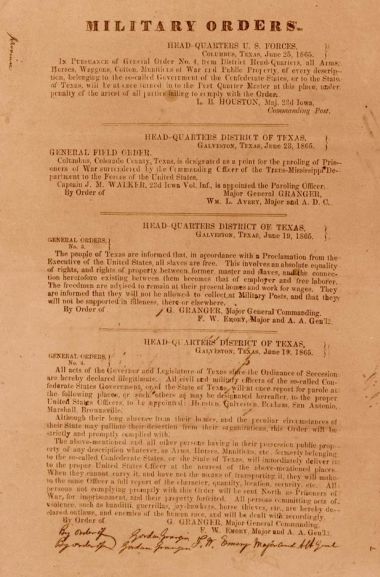

The people of Texas were told they now had absolute equality. While over 250,000 people were suddenly free, the news brought a massive shock. Some chose to stay and work for pay, while others ran immediately, moving north or into nearby states like Oklahoma, Louisiana, and Arkansas to start their new free lives.
Historians still debate exactly why the news took so long to reach Texas. Some say the original messenger was killed on the way. Others believe slave owners intentionally hid the news to get one last cotton harvest, or that Texas simply ignored Lincoln’s power because they were part of the Confederacy. No matter the reason, people were kept in chains much longer than they should have been.
Imagine that moment. Imagine the shock, the tears, the sudden rush of relief and anger all mixed together. Two and a half extra years of stolen life. That is why Juneteenth (combining “June” and “Nineteenth”) started right there in Texas. It was the absolute end of chattel slavery in the Confederacy.
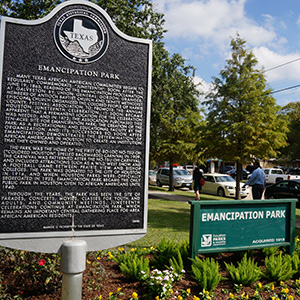
For Black families in the South, and Texas specifically, June 19th became our true Independence Day. We celebrated it with red food and drinks (symbolizing the resilience and blood of our ancestors), barbecue, music, and prayer. We bought our own land—like Emancipation Park in Houston—just so we would always have a safe place to gather and celebrate our survival.
We even threw away our old clothes and dressed “to the nines” in fine clothing. In 1872, Black leaders raised money to buy ten acres of land in Houston, naming it Emancipation Park, creating the first official space dedicated entirely to celebrating Black freedom.
Putting Down Roots: Freedmen’s Towns and Olivewood Cemetery
When freedom finally came, Black Texans didn’t just celebrate—they built. To truly understand the footprint of Juneteenth, you have to look at the communities and sacred spaces that rose directly out of Emancipation.
Newly freed people pooled their resources and established over 500 independent communities across the state, known as Freedom Colonies or Freedmen’s Towns.
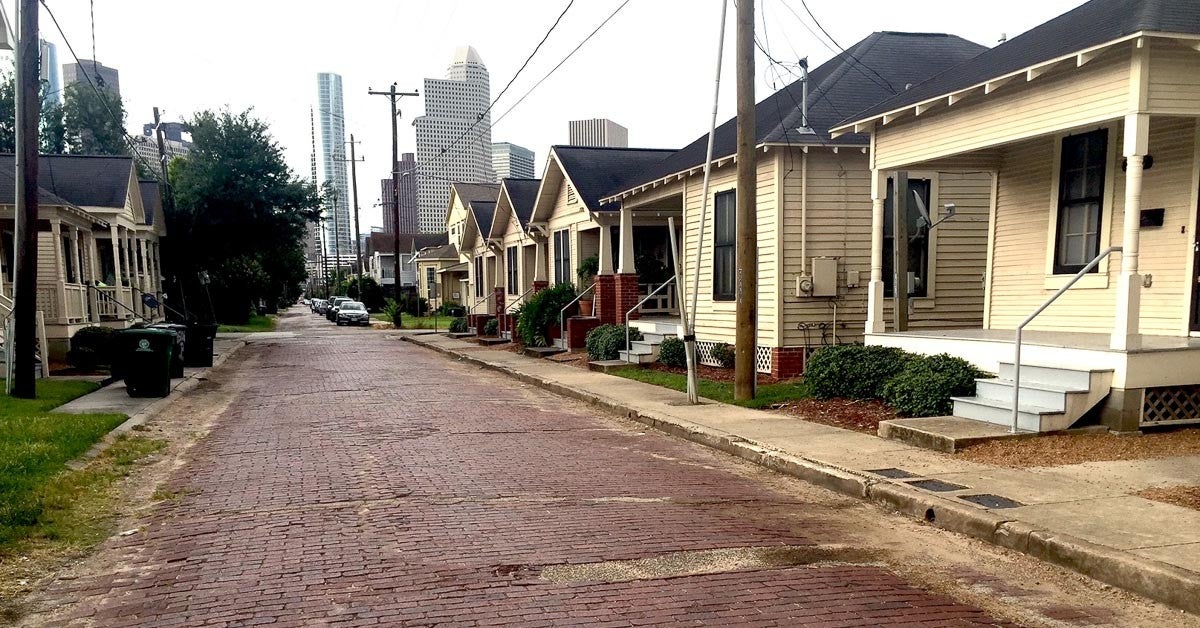
In Houston, the historic Fourth Ward became the city’s premier Freedmen’s Town. Enslaved people from surrounding plantations marched into the city after June 19th, settled along the Buffalo Bayou, and built a thriving center of Black commerce, culture, and faith out of nothing. They paved their own streets with bricks they shaped by hand, built churches like Trinity Methodist, and established schools to educate the first generation of free Black children.
But their determination didn’t stop at building places to live; they also fought for dignity in death. In 1875, just ten years after that first Juneteenth, Black leaders in Houston incorporated Olivewood Cemetery.


Before Olivewood, segregation meant Black people were denied proper, respectful burial grounds. Creating this cemetery was a massive act of independence—essentially “emancipation written in stone.”
Olivewood is the final resting place for more than 4,000 early Black residents, including hundreds who were born into slavery and lived to see the light of freedom on June 19, 1865. Giants of Texas history are buried there, like Richard Allen, a formerly enslaved man who became a state legislator and helped buy Emancipation Park. For these ancestors, their headstones were the very first opportunity they ever had for permanent self-expression.
If It’s Not “For” You, Why Care?
Let’s be completely honest: Juneteenth is not for white people. It is a sacred Black holiday. It is a space for us to honor our ancestors who survived the unthinkable, to breathe a sigh of relief, and to celebrate our joy.
However, if you are someone who usually scrolls past Juneteenth posts, or perhaps you feel a little annoyed that there’s “another holiday” on the calendar, I invite you to look at it differently. You don’t have to center yourself in it to learn from it. Here is what you can choose to take away from this day:
- A Lesson in Ultimate Resilience: You get to witness the incredible strength of a people who were stripped of their names, families, and humanity, yet still managed to build a culture of deep love, joy, and community. Learning about how Black Texans built schools, businesses, and towns out of nothing after 1865 is a masterclass in human resilience.
- A Clear View of American History: True freedom in America didn’t happen all at once in 1776. It happened in waves, often delayed by greed. When you understand Juneteenth, you get a much more honest, accurate picture of how our country was actually built.
- The Power of Staying Vigilant: Juneteenth reminds us that passing a law on paper isn’t enough. Justice requires enforcement. It requires people showing up—like those Union soldiers—to make sure the law is actually practiced. That is a lesson anyone can apply to fighting for fairness in their own workplace, school, or community today.
And if you’re a Black person who is from the East Coast or West Coast who likes to make the common dumb statement, “yall were the last to find out…”
The Bottom Line
Juneteenth is now a federal holiday in America, commemorating the day enslaved Texans were finally informed of their freedom under the 13th Amendment. Texas made it an official state holiday first in 1980, and following the nationwide protests for justice in 2020, it finally became the 11th U.S. federal holiday on June 17, 2021.
You don’t have to cook a brisket or wear a Juneteenth shirt to respect the day. But you can choose to acknowledge the truth of what happened. Juneteenth is a reminder that freedom is a journey, not a destination.
Discover more from The Whitsdom Press
Subscribe to get the latest posts sent to your email.
Leave a comment